

What Happens During an AC Tune-Up — And Why It Matters Before Summer Hits
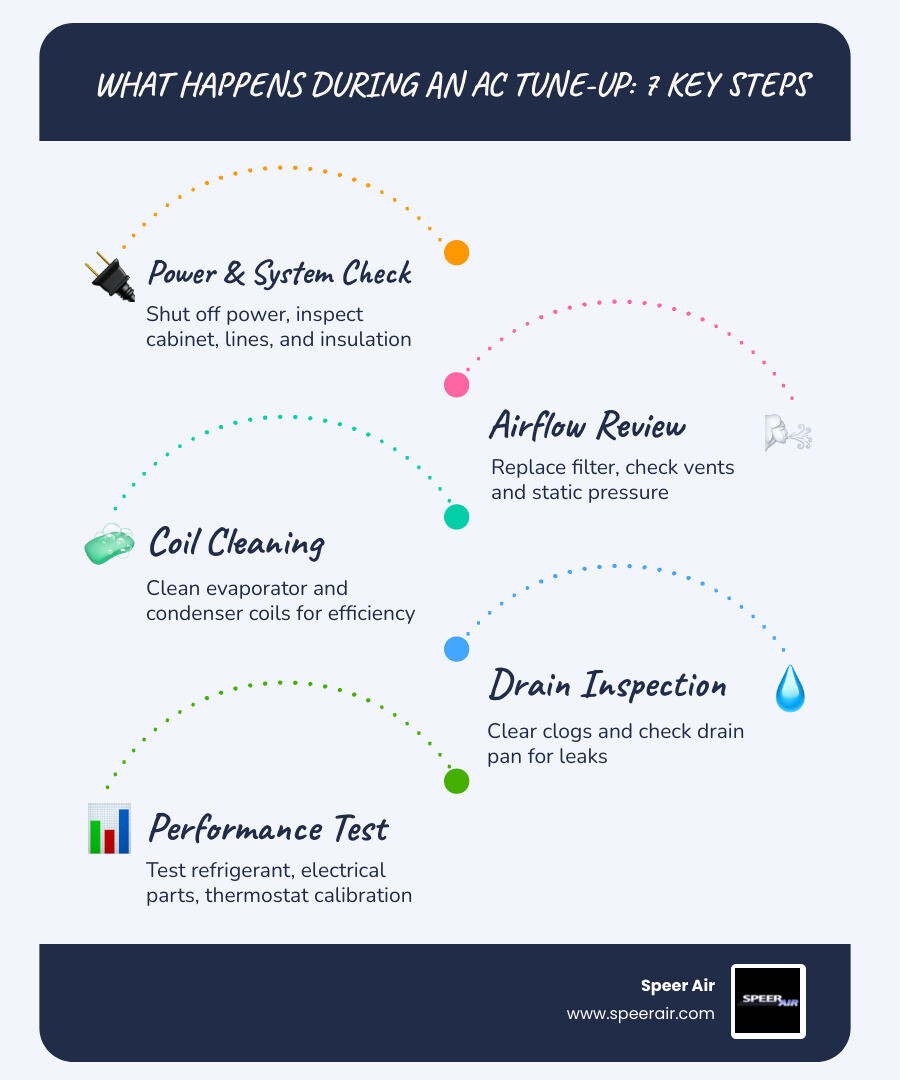
What happens during an AC tune up step by step is something every homeowner in Northern New Jersey should understand before the summer heat arrives. A professional AC tune-up is a full inspection, cleaning, and performance check of your cooling system — designed to catch small problems before they turn into expensive breakdowns.
Here’s a quick overview of what a technician does during a standard AC tune-up:
- Shut off power and inspect the system — check the cabinet, refrigerant lines, and insulation for wear
- Check the air filter, vents, and airflow — replace dirty filters and check for airflow restrictions
- Clean the evaporator and condenser coils — remove debris and restore heat transfer efficiency
- Inspect the condensate drain and drain pan — clear clogs and check for leaks
- Test refrigerant charge and check for leaks — verify proper pressure levels
- Inspect electrical parts and moving components — test capacitors, contactors, blower motor, and wiring
- Calibrate the thermostat and run a full performance test — confirm the system is cooling correctly and cycling safely
Most tune-ups take between 1 and 2 hours for a standard residential system. They’re recommended once a year, ideally in spring before you need the AC most.
If your system hasn’t been serviced in the past year, you’re not alone — but skipping maintenance can lead to higher energy bills, reduced cooling, and unexpected failures on the hottest days of the year.
What Is an AC Tune-Up and Why It Matters
An AC tune-up is preventive maintenance for your cooling system. Think of it like a wellness check for equipment that has one job all summer: keep your home comfortable without complaining too loudly.
During a tune-up, we inspect, clean, test, and adjust the parts that affect cooling performance, airflow, safety, and efficiency. The goal is not just to make sure the system turns on. The goal is to make sure it operates the way it should.
Regular tune-ups matter because HVAC systems in Northern New Jersey and nearby Pennsylvania service areas work through real seasonal swings. Even if your air conditioner seems “fine,” dust buildup, electrical wear, clogged drains, and airflow problems can quietly reduce performance over time.
What happens during an ac tune up step by step for a homeowner?
From a homeowner’s point of view, the visit usually includes:
- A visual inspection of the indoor and outdoor equipment
- Cleaning of key components like coils and drains
- Airflow and filter checks
- Electrical and refrigerant testing
- Thermostat verification
- A final system run test
- A summary of findings and any recommended next steps
So if you are wondering what happens during an AC tune up step by step, the short answer is this: a technician checks the system from top to bottom to catch wear, restore efficiency, and confirm safe operation.
Why annual AC maintenance is important
Annual maintenance helps with:
- Better efficiency and lower energy waste
- Fewer mid-season breakdowns
- Longer equipment life
- More consistent indoor comfort
- Cleaner operation and better airflow
- Maintenance records that may help support warranty requirements
Research consistently shows that tune-ups can help extend system life by several years and improve efficiency enough to reduce unnecessary operating costs. Many manufacturers also require proof of professional service to help keep warranty coverage valid.
For more on the value of routine service, visit Regular AC Maintenance for Your Home Comfort.
How often should homeowners schedule a tune-up?
For most homes, once a year is the baseline. Spring is usually the best time, before the first major heat wave reminds everyone else to call too.
A few exceptions:
- Heat pumps often benefit from two visits per year because they handle both heating and cooling
- Older systems may need closer attention
- Homes with heavy AC use, pets, dust, or indoor air quality issues may benefit from more frequent filter and airflow checks
If you want a deeper look at timing, read Don’t Wait for a Breakdown: How Often to Schedule Your Tune-Ups.
What Happens During an AC Tune Up Step by Step
A professional tune-up follows a logical sequence so nothing gets missed. Some systems vary slightly, but this is the standard flow homeowners can expect.
Step 1: Shut off power and inspect the system
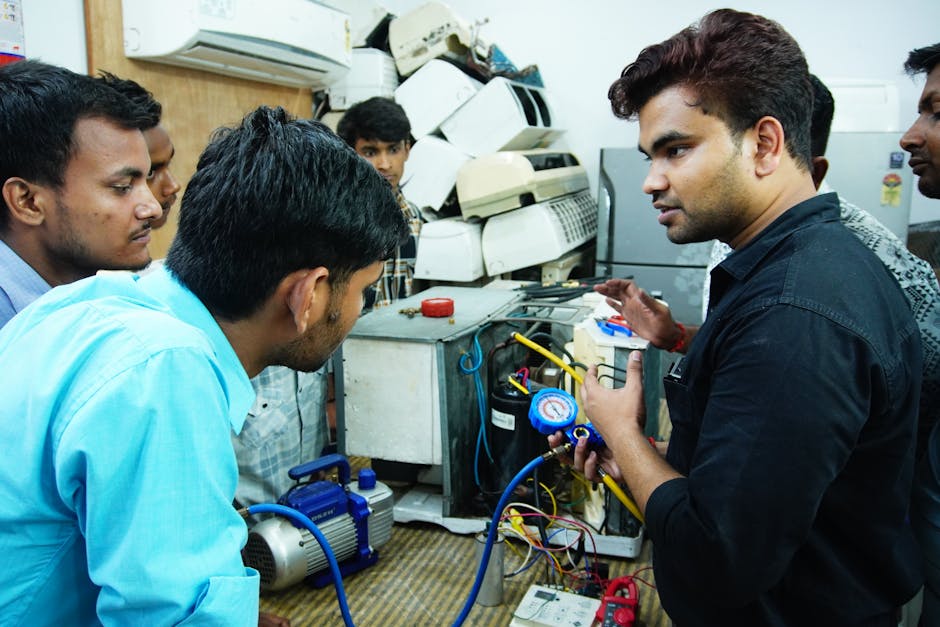
Safety comes first. Before touching electrical parts or moving components, power is shut off at the disconnect and, when needed, at the breaker.
Then the visual inspection begins. We look for:
- Cabinet damage, rust, or loose panels
- Refrigerant line wear or damaged insulation
- Signs of oil residue that may suggest a refrigerant leak
- Dirt buildup around the outdoor unit
- General wear on accessible system parts
This first step helps identify obvious issues before testing starts. Sometimes a quick look already reveals why a system has been struggling.
Step 2: Check the air filter, vents, and airflow
A dirty filter is one of the most common airflow problems in residential AC systems. It can restrict air movement, reduce comfort, and force the blower to work harder than necessary.
During this step, we check:
- The air filter for dirt and blockage
- Return vents for restriction
- Supply vents for weak airflow or obstructions
- Signs of dust buildup that may affect circulation
In some cases, technicians may also evaluate static pressure or overall airflow performance. If airflow is off, the problem may involve more than the filter, including duct issues, blower performance, or coil buildup.
Step 3: Clean the evaporator and condenser coils
Your AC moves heat by using two main coils:
- The evaporator coil indoors absorbs heat from your home
- The condenser coil outdoors releases that heat outside
When coils get dirty, heat transfer drops. That means longer run times, weaker cooling, and reduced efficiency. Some industry sources note that dirty coils can cause major efficiency losses, which is one reason coil cleaning is a standard part of quality maintenance.
This step may include:
- Removing debris from the outdoor unit
- Cleaning condenser coil surfaces
- Inspecting the indoor evaporator coil
- Straightening damaged fins when appropriate
- Checking for signs of corrosion or excessive buildup
Step 4: Inspect the condensate drain and drain pan
Air conditioners do more than cool. They also remove moisture from indoor air. That moisture has to drain properly.
During a tune-up, we inspect:
- The condensate drain line for clogs
- The drain pan for standing water, rust, or cracks
- Signs of algae or sludge buildup
- Any overflow or water damage risk
A blocked condensate line can lead to leaks, musty odors, humidity problems, or system shutdowns if a safety switch is triggered. In humid summer conditions, this step matters more than many homeowners realize.
Step 5: Test refrigerant charge and look for leaks
Refrigerant is not like fuel in a car. It does not get “used up.” If levels are low, that usually points to a leak or an improper charge.
During this step, a technician may:
- Check refrigerant pressures
- Compare readings to manufacturer targets
- Evaluate superheat and subcooling when appropriate
- Look for signs of leaks or iced coils
- Check line temperature and system response
Improper refrigerant charge can reduce efficiency, hurt cooling capacity, and put the compressor under extra stress. Frozen coils, weak cooling, and long run times often connect back to airflow or refrigerant issues.
Step 6: Inspect electrical parts and moving components
A large part of tune-up work is electrical. Many AC failures begin with parts that show early warning signs before they fail completely.
Components commonly inspected or tested include:
- Capacitors
- Contactors
- Wiring and terminals
- Voltage and amperage readings
- Blower motor
- Condenser fan motor
- Belts, if the system uses them
- Bearings or moving parts that require lubrication
Loose or corroded electrical connections can affect performance and safety. Capacitors and contactors are especially important because they are common trouble spots during heavy summer operation.
Step 7: Calibrate the thermostat and run a full performance test
After cleaning and inspection, the system is run and checked under operating conditions.
This final step may include:
- Verifying thermostat accuracy and response
- Checking smart thermostat settings or scheduling features
- Measuring temperature split between return and supply air
- Confirming proper cycling
- Watching startup and shutdown behavior
- Verifying safety controls and overall cooling performance
A healthy temperature difference between return and supply air is often around 15 to 20 degrees Fahrenheit, though exact results depend on conditions and system design.
This is where all the earlier work comes together. If the AC starts, cools, drains, and cycles correctly, the tune-up is doing its job.
What Specific Parts Are Inspected, Cleaned, and Tested During the Visit
Every contractor’s checklist may be a little different, but a thorough AC tune-up usually covers the same major systems.
| Category | Common items |
|---|---|
| Inspected | Compressor, blower assembly, duct connections, refrigerant lines, insulation, fan blades, electrical wiring |
| Cleaned | Air filter or filter area, evaporator coil, condenser coil, condensate line, drain pan, cabinet debris, outdoor unit area |
| Tested | Capacitors, contactors, voltage, amperage, thermostat response, temperature differential, airflow, cycling |
Inspected components
Inspection focuses on the condition of the system and signs of wear. This may include:
- Compressor condition
- Blower wheel and blower assembly
- Fan blades and motor mounts
- Ductwork connections and visible leakage concerns
- Refrigerant lines and insulation
- Electrical terminals and wire condition
- Cabinet panels, screws, and access points
Cleaned components
Cleaning helps restore performance and prevent buildup from turning into a service call later. Common cleaning tasks include:
- Replacing or checking the air filter
- Cleaning condenser coils
- Inspecting and cleaning accessible evaporator coil surfaces
- Clearing the condensate drain line
- Cleaning the drain pan
- Removing leaves, dirt, and debris from around the outdoor unit
Tested components
Testing confirms whether the system is operating within a normal range. This can include:
- Capacitor readings
- Contactor condition and operation
- Voltage and amperage measurements
- Thermostat communication and calibration
- Temperature split across the system
- Startup, shutdown, and cycle behavior
For a closer look at professional maintenance service, see Professional AC Maintenance in Rockaway.
How Long an AC Tune-Up Takes, How to Prepare, and Signs You Need One
A tune-up is usually straightforward, but a little homeowner prep helps the visit go more smoothly.
How long does a typical tune-up take?
Most standard residential AC tune-ups take about 1 to 2 hours. Some inspections are finished faster, especially when the system is clean and easy to access. Others take longer if:
- The equipment is older
- Coils or drains are heavily clogged
- Access is tight
- The technician finds issues that need more diagnostic time
Research commonly places the inspection itself at roughly 35 minutes to an hour, with full maintenance often extending beyond that once cleaning and testing are included.
How to prepare for your AC maintenance appointment
You do not need to do the technician’s job. But a little prep helps us get right to work.
Use this checklist:
- Clear clutter around the indoor unit and thermostat
- Make sure the outdoor condenser is accessible
- Secure pets so doors can open safely and equipment areas stay clear
- Write down any concerns like noises, odors, weak airflow, or high humidity
- Note when you last changed the filter
- Make sure someone can provide access to the home
- If applicable, ensure an outdoor hose is accessible for coil cleaning
Those small steps can save time and help us focus on the issues you have actually noticed.
Signs your AC needs a tune-up soon
Even if it has not failed yet, your system may be asking for help in its own dramatic way. Warning signs include:
- Weak airflow from vents
- Warm or inconsistent air
- Rising utility bills without another clear reason
- Strange noises like buzzing, rattling, squealing, or clicking
- Musty or unusual odors
- Frequent cycling
- Excess indoor humidity
- Ice buildup on refrigerant lines or coils
- More than 12 months since the last professional service
If any of these sound familiar, this guide on The Importance of Regular AC Service in Rockaway is worth a read.
What Happens If You Skip Regular AC Tune-Ups
Skipping maintenance does not always cause instant disaster. Sometimes the AC keeps running for a while, which is honestly part of the problem. It can seem fine while quietly wearing itself out.
Short-term problems from skipped maintenance
In the near term, neglect often leads to:
- Reduced cooling performance
- Longer run times
- Higher energy use
- Dirty filters and restricted airflow
- Clogged condensate drains
- Dust and debris buildup on coils
A dirty filter alone can increase energy use significantly, and dirty coils can force the system to work harder just to deliver the same comfort.
Long-term consequences of neglect
Over time, small issues become expensive ones. Skipped tune-ups can contribute to:
- Extra compressor strain
- Blower motor wear
- Fan motor failure
- Refrigerant-related problems going unnoticed
- Shorter equipment lifespan
- Poorer indoor air quality
- Missing service records that may matter for warranty support
Regular maintenance is one of the simplest ways to avoid premature replacement. Well-maintained systems often last meaningfully longer than neglected ones.
For more perspective, read HVAC Maintenance Contracts: Peace of Mind or Waste of Money?.
Why maintenance plans help homeowners stay on track
A maintenance plan is helpful for one simple reason: life gets busy.
Plans can make it easier to stay consistent by providing:
- Scheduled reminders
- Seasonal service visits
- Ongoing maintenance records
- A clearer history of system condition
- Less chance of forgetting service until the first 90-degree day
If you want to explore that option, visit HVAC Maintenance Plan Rockaway NJ or HVAC Maintenance Program Denville.
Frequently Asked Questions About What Happens During an AC Tune Up Step by Step
Can I do any AC tune-up tasks myself?
Yes, a few basic maintenance tasks are homeowner-friendly:
- Change or check the air filter regularly
- Keep the outdoor unit clear of leaves and debris
- Make sure supply and return vents are not blocked
- Check thermostat batteries and settings
- Watch for water leaks, weak airflow, or strange noises
But full tune-ups should be left to trained professionals. Refrigerant testing, electrical measurements, capacitor checks, and deep diagnostics involve safety risks and specialized tools.
Is an AC tune-up the same as an AC repair?
No. A tune-up is preventive service. It is meant to keep a working system efficient and catch problems early.
A repair is different. Repairs address a specific fault, such as:
- The AC not turning on
- Warm air coming from vents
- A failed capacitor or contactor
- A refrigerant leak
- A blower or fan motor problem
In other words, a tune-up helps prevent emergencies. A repair deals with one that is already here.
What should I do after the tune-up is finished?
After the visit:
- Review the technician’s findings
- Keep your maintenance paperwork
- Ask questions about anything noted during service
- Follow recommendations for repairs if needed
- Replace filters on schedule
- Plan the next maintenance visit before the season gets busy
For a useful follow-up checklist, see The Ultimate Post Winter HVAC Inspection Checklist.
Conclusion
Now you know what happens during an AC tune up step by step: power is shut off, the system is inspected, airflow is checked, coils and drains are cleaned, refrigerant and electrical components are tested, and the thermostat and cooling performance are verified.
That process may sound simple on paper, but it does a lot of work behind the scenes. It helps protect efficiency, comfort, system lifespan, and your chances of avoiding a breakdown in the middle of a sticky Northern New Jersey summer.
If you are ready to schedule service or want to learn more, explore HVAC Tune Up Rockaway or visit our air conditioning service page.