

What to Expect During AC Replacement: A Complete Homeowner Overview
If you’re wondering what to expect during AC replacement, here’s the short version: a standard central AC replacement takes 4 to 8 hours, your home will be without cooling during that window, and by the end of the day your new system should be running, tested, and ready to go.
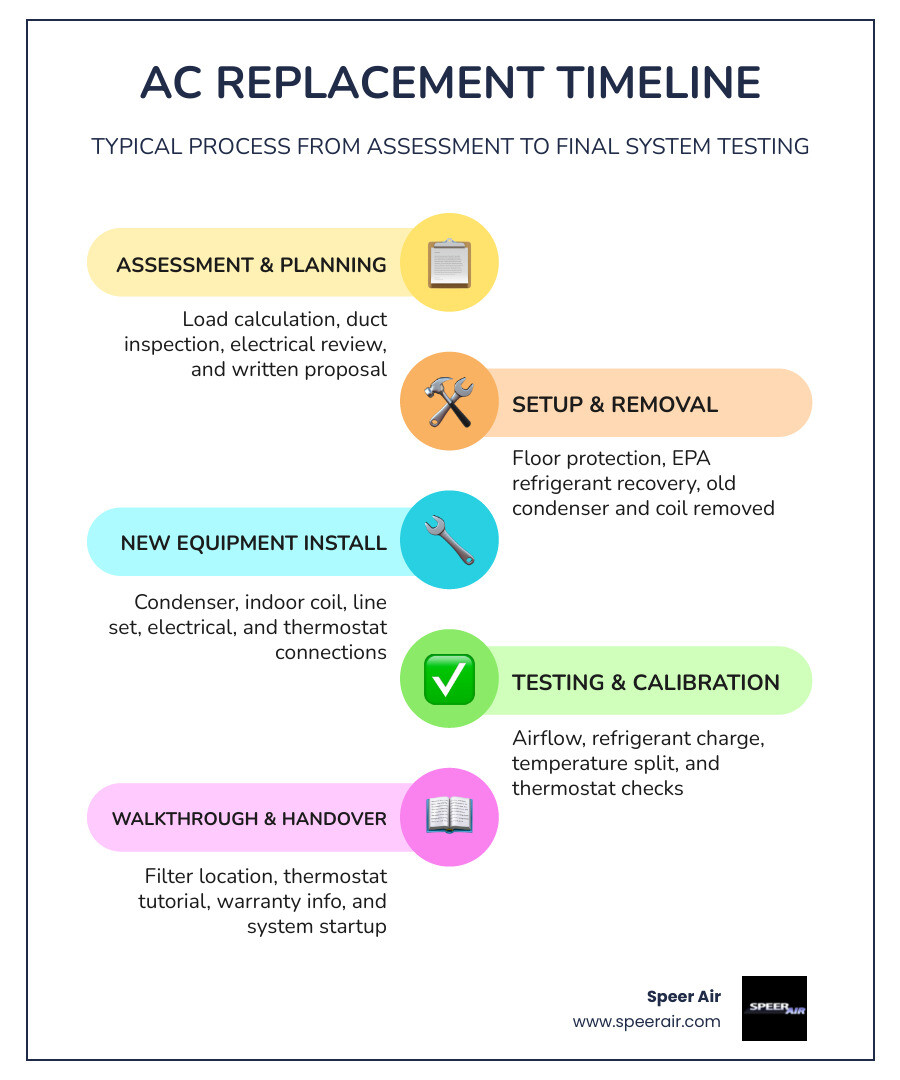
Quick overview of the AC replacement process:
- Pre-installation – In-home assessment, load calculation, written proposal, permit pulled
- Arrival and setup – Crew arrives, protects floors, reviews the plan with you
- Removal – Old refrigerant is recovered (required by federal law), old equipment disconnected and hauled away
- Installation – New outdoor condenser, indoor coil, line set, electrical connections, and thermostat installed
- Testing – Refrigerant charge verified, airflow measured, temperature split checked, thermostat calibrated
- Walkthrough – Technician reviews the system with you, covers filter location, thermostat use, and warranty registration
For most Northern New Jersey homeowners, the entire process wraps up the same day. More complex jobs – like full HVAC replacements or homes needing ductwork modifications – can run two to three days.
Replacing your air conditioner is one of the bigger home improvement decisions you’ll make. Most well-maintained AC systems last between 15 and 20 years, which means this is something most homeowners only deal with once or twice in their lifetime. And a lot has changed – modern systems use 20 to 40% less energy than units from just a decade ago, so the timing of your replacement matters.
The process is faster and less disruptive than most people expect, but knowing what’s coming makes it even smoother. Whether your system finally gave out on the hottest week of summer or you’re planning ahead, this guide walks you through every phase – from the first phone call to the final inspection.
Signs It’s Time to Replace Your AC Instead of Repairing It
Deciding whether to sink more money into an old unit or invest in a new one is a common dilemma for homeowners in places like Morris County or Essex County. While a quick fix might seem cheaper today, an aging, inefficient system can quickly become a “money pit.”
The clearest warning signs homeowners should not ignore
There are several red flags that suggest your air conditioner is nearing the end of its functional life. If your system is between 15 and 20 years old, it is likely reaching the limit of its reliability. Beyond age, pay attention to how your home feels. Are there “hot spots” in certain rooms? Is the indoor humidity making the air feel sticky?
Frequent breakdowns are another major indicator. If you find yourself calling for service more than once a season, those repair bills are a signal that the internal components are failing. You might also notice strange grinding or squealing sounds, or excessive dust accumulation, which points to signs your HVAC system is ready for an upgrade.

Repair vs. replace: how to make the smarter long-term decision
A helpful industry standard is the “$5,000 Rule.” Multiply the age of your unit by the cost of the repair. If the total exceeds $5,000, replacement is generally the smarter financial move. For example, a $600 repair on a 12-year-old unit ($7,200) suggests it’s time to move on.
Beyond the immediate fix, consider energy savings. Modern units are significantly more efficient, often saving homeowners 20% to 40% on monthly cooling costs compared to units from May 2016 or earlier. When you factor in those savings and the peace of mind of a new warranty, choosing to replace vs. repair becomes much clearer.
Should you replace the AC only or the entire HVAC system?
We often get asked if it’s necessary to replace the furnace at the same time as the AC. While it is possible to replace just the outdoor unit and the indoor evaporator coil, we generally recommend a matched system. If your furnace is also over 12-15 years old, replacing both ensures that all components are designed to work together at peak efficiency.
A mismatched system can lead to reduced efficiency, shortened equipment lifespan, and may even void your manufacturer’s warranty. Opting for a complete HVAC replacement in Northern NJ often saves you money on labor in the long run since the crew is already on-site and working on the shared components like the blower motor and duct connections.
How to Prepare Before Replacement Day
Preparation is the secret to a stress-free installation. By taking a few small steps before our crew arrives, you ensure the safety of your family and help the technicians work as efficiently as possible.
What to expect during AC replacement before the crew arrives
The process actually starts weeks before the installation. A professional contractor will visit your home to perform a detailed assessment. This includes a “load calculation,” which considers your home’s square footage, window placement, and insulation levels to determine the perfect unit size.
During this phase, we also inspect your ductwork and electrical panel to ensure they can handle a modern high-efficiency system. Once the plan is set, we’ll help you prepare your home for the new HVAC setup, which includes pulling the necessary local permits required in New Jersey.
What should be included in the written estimate or contract
Never settle for a verbal quote. A professional contract should be detailed and transparent. It should include:
- Specific model numbers for both the indoor and outdoor units.
- A clear scope of work (what is being removed and what is being added).
- Start and estimated completion dates.
- All labor costs, permit fees, and disposal fees for the old equipment.
- Warranty terms for both the equipment and the installation labor.
How to choose a reputable HVAC contractor and avoid common pitfalls
With an investment this large, you want to ensure you’re working with experts. Look for a contractor with deep roots in the community—like our family-owned business that has served Northern NJ since 1900. Verify that the company is licensed, insured, and employs NATE-certified technicians.
Avoid “pressure sales” or quotes that seem suspiciously low; often, these contractors skip the critical load calculation or use sub-par materials. A reputable company will provide a comprehensive HVAC replacement guide and stand behind their work with a solid reputation.
What to Expect During AC Replacement on Installation Day
The big day has arrived! While every home is unique, most standard replacements follow a very specific rhythm.
Removal phase: what happens to your old AC system
The first task is safely removing the old equipment. Per EPA Section 608, it is illegal to simply vent old refrigerant into the atmosphere. Our technicians use specialized recovery machines to safely pump the refrigerant into canisters for proper recycling. Once the system is “recovered,” we disconnect the electrical and refrigerant lines, remove the old condenser and indoor coil, and haul them away for responsible disposal.
Installation phase: setting the new equipment and connections
With the old unit gone, we prep the site. This might involve leveling the outdoor pad or installing a new one to ensure the condenser stays stable. Inside, we install the new evaporator coil and connect the new copper “line set” that carries refrigerant between the two units. We also seal the connections to your ductwork using mastic or UL-listed tape to prevent air leaks and ensure the AC installation prevents future repairs caused by strain on the system.
Testing phase: how technicians verify performance before they leave
We don’t just “turn it on and walk away.” The testing phase is the most critical part of the day. We use a vacuum pump to remove all air and moisture from the lines before charging the system with fresh refrigerant. Then, we measure the “temperature split”—the difference in temperature between the air going into the system and the air coming out. We also check static pressure and verify that the condensate drain is flowing freely so you don’t end up with water leaks in your attic or basement.
How long does AC replacement take and what can slow it down?
Most residential “change-outs” take between 4 and 8 hours. However, certain factors can extend this timeline.
| Project Type | Typical Duration | Potential Delay Factors |
|---|---|---|
| Standard AC Replacement | 4 – 8 Hours | Difficult attic/crawl space access, electrical upgrades needed |
| AC + Ductwork Mods | 1 – 2 Days | Rerouting ducts, repairing damaged sections |
| Full HVAC Replacement | 2 – 3 Days | Furnace installation, complex zoning, thermostat rewiring |
Managing Downtime, Disruption, and Comfort During the Project
We know that having a crew in your home can be a bit of a whirlwind. Here is how we manage the environment to keep you comfortable.
What to expect during AC replacement if you stay home
You are absolutely welcome to stay home while we work! Just be prepared for some tool noise—drilling, hammering, and the hum of a vacuum pump are all normal. There will also be a brief period where we need to shut off the power at the breaker panel to safely make electrical connections. We recommend keeping pets in a secure, quiet room away from the work zone to keep them safe and prevent them from slipping out of open doors.
Common disruptions and how to minimize them
The biggest disruption is usually the lack of cooling. On a hot July day in Union County or Middlesex County, your indoor temperature might rise by 5 to 10 degrees while the system is offline. To minimize this:
- Keep your blinds and curtains closed to block out the sun.
- Use ceiling fans to keep air moving.
- Clear the workspace of any breakables or valuables.
- We use drop cloths and protective floor coverings to keep dust and debris off your carpets.
Permits, inspections, and final approval
In many New Jersey jurisdictions, a mechanical permit is required for AC replacement. This ensures that the installation meets all local safety and building codes. Once the job is done, a local inspector will typically visit (usually a week or two later) to verify the electrical connections, clearances, and drainage. We handle the paperwork to make this process as seamless as possible for you.
Choosing the Right New System for Comfort and Efficiency
Selecting a new system isn’t just about picking a brand; it’s about matching the technology to your lifestyle and home’s specific needs.
Why proper system sizing matters more than homeowners think
Bigger is not always better when it comes to air conditioning. An oversized unit will “short cycle,” meaning it turns on and off too frequently. This prevents the system from properly dehumidifying your home, leaving you feeling cold but clammy. Conversely, an undersized unit will run constantly, struggling to keep up and driving up your energy bills. Learning how to size your NJ HVAC correctly is the foundation of long-term comfort.
Single-stage vs. multi-speed vs. variable-speed AC units
Modern technology offers several levels of performance:
- Single-Stage: Like a light switch, it’s either 100% on or completely off. These are the most traditional and budget-friendly options.
- Multi-Speed: Usually has two stages (high and low). It runs on the lower, more efficient stage most of the time and kicks into high gear only on the hottest days.
- Variable-Speed: The “gold standard.” These units can adjust their speed in tiny increments (between 30% and 100% capacity) to maintain a perfectly consistent temperature and superior humidity control. Choosing the right AC system often comes down to balancing your upfront budget with your desire for precision comfort.
Ductwork, airflow, and efficiency upgrades worth discussing
A high-efficiency AC unit is only as good as the ducts it’s connected to. If your ducts are leaky or uninsulated, you could be losing 20% of your cooled air before it ever reaches your living room. During replacement, it’s the perfect time to discuss high-efficiency HVAC installation options like smart thermostats, which can learn your schedule and optimize your energy use automatically.
After Installation: Final Walkthrough, Warranties, and Next Steps
Before our team packs up the truck, we want to make sure you are 100% comfortable with your new investment.
The post-installation checks every homeowner should ask about
We perform a final walkthrough with you to show you exactly what was done. During this time, ask:
- Where is my new air filter located, and how do I change it?
- Can you show me how to program the new thermostat?
- Did the system hit the target temperature split during testing?
- Is the condensate pump or drain line easily accessible for cleaning?
Warranties, maintenance recommendations, and support after the job
Most modern systems come with a 10-year parts warranty, but there’s a catch: you must register the product with the manufacturer (usually within 60 days) to get the full term. We can often help with this registration. Additionally, regular maintenance is required to keep that warranty valid. Scheduling an annual tune-up ensures your system continues to run at peak efficiency for years to come.
When to call back after a new AC replacement
While we strive for perfection, a new system has a “break-in” period. You should call us right away if you notice:
- Any water pooling around the indoor unit.
- Unusual “new car” smells that persist for more than 24 hours.
- The thermostat not reaching the set temperature.
- Any strange rattling or vibrating noises.
Conclusion: Plan Ahead for a Smoother AC Replacement Experience
Knowing what to expect during AC replacement takes the mystery and stress out of the process. From the initial load calculation to the final testing, every step is designed to ensure your Northern New Jersey home remains a sanctuary of cool comfort, even in the height of summer.
By choosing a partner with over a century of experience in the industry, you aren’t just getting a new piece of equipment—you’re getting a system that is sized correctly, installed professionally, and backed by a team that cares about your long-term satisfaction. If you’re ready to upgrade your home’s efficiency and comfort, we are here to help you navigate every step of the AC replacement in Rockaway, NJ and beyond.