

Why Summer AC Bills in Rockaway Hit So Hard — and What You Can Do About It
If you’re trying to figure out how to lower AC bills during summer, here’s a quick answer before we dive in:
The fastest ways to lower your AC bill this summer:
- Raise your thermostat to 78°F when home, 85°F when away
- Clean or replace your AC filter monthly
- Close blinds and curtains on south- and west-facing windows during the day
- Use ceiling fans only in occupied rooms — turn them off when you leave
- Run heat-producing appliances (oven, dryer, dishwasher) at night
- Seal gaps around windows and doors with caulk or weatherstripping
- Schedule a professional AC tune-up to keep the system running efficiently
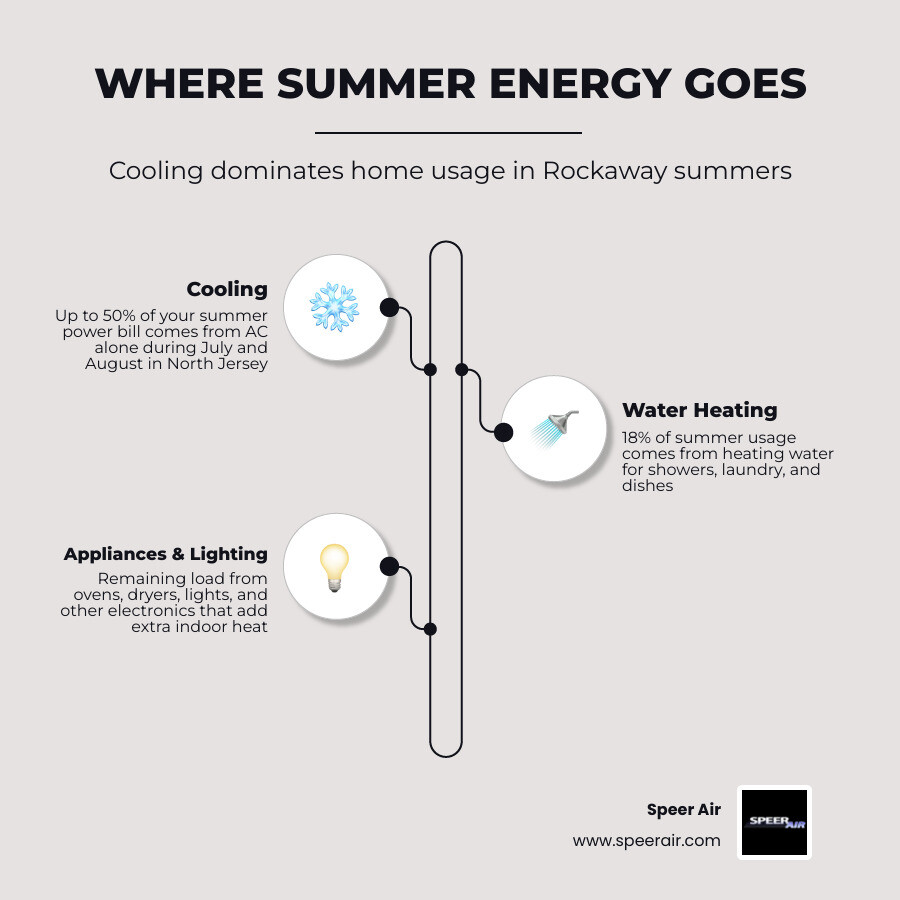
Up to 50% of your home’s summer power bill comes from cooling alone. For homeowners in Rockaway and across Morris County, that’s a real pressure point — especially during the stretch of July and August when temperatures stay high and humidity makes every extra degree feel worse indoors.
The good news is that most of the biggest savings don’t require expensive equipment. A combination of simple daily habits, basic maintenance, and a few low-cost upgrades can make a meaningful difference on your next bill.
This guide covers everything — from no-cost fixes you can do today to longer-term investments worth considering if your system is older or your home isn’t well-sealed.
How to Lower AC Bills During Summer With the Fastest No-Cost Fixes
We often look for complex solutions to high energy bills, but some of the most effective strategies are completely free. In May 2026, as we prepare for another North Jersey summer, the first place to look is at our daily routines. Small adjustments in how we interact with our homes can lead to substantial savings without spending a dime.
How to lower AC bills during summer by changing daily habits first
The key to efficiency is reducing the “delta,” or the difference between the outdoor temperature and your indoor setting. We recommend aiming for a smaller indoor-outdoor gap. Every degree you set your thermostat above 75°F can save you between 10% and 15% in energy used.
Beyond the thermostat, think about heat sources inside the house. Using the oven during a 90-degree Rockaway afternoon forces your AC to work double-time. We suggest avoiding the oven and using a microwave or outdoor grill instead. Additionally, utilize your kitchen and bathroom exhaust fans while cooking or showering to pull heat and humidity directly out of the house. Just remember to turn them off about 10 minutes after you’re done so they don’t start sucking out the cool air you’ve already paid for!
Use fans the right way so your AC runs less
Fans are one of our favorite tools because they use roughly 1/60th the energy of a central air conditioner. However, there is a catch: fans cool people, not rooms. They create a “wind-chill effect” on your skin, making you feel up to 4 degrees cooler.
To maximize this:
- Check the direction: Ensure ceiling fan blades rotate counterclockwise in the summer to push air straight down.
- Turn them off: If no one is in the room, the fan is just wasting electricity.
- Raise the AC: Because the fan makes you feel cooler, you can comfortably raise your AC setting by about 4 degrees, which can cut your cooling costs by up to 40%.
Block heat before it enters your house
It is much cheaper to keep heat out than it is to remove it once it’s inside. Direct sunlight hitting your windows can turn your living room into a greenhouse. By keeping curtains and blackout shades closed—especially on south- and west-facing windows—you prevent significant heat gain.

Set Your Thermostat for Comfort and Maximum Savings
Your thermostat is the “brain” of your HVAC system. If it’s poorly placed or programmed incorrectly, it can drive up your costs in May 2026 and beyond. For maximum efficiency, we suggest a “set it and forget it” approach rather than constant tinkering.
The best thermostat settings for Rockaway summer days
While everyone has a different comfort level, the Department of Energy suggests 78°F as the “sweet spot” when you are home. If that feels too warm at first, try raising the temperature by just one degree each day to let your body acclimate. When you’re away for more than four hours, we recommend setting it to 85°F. This prevents the house from becoming a heat trap while ensuring your pets stay safe and your humidity levels remain under control.
How to lower ac bills during summer with a programmable or smart thermostat
If you still have an old manual slider thermostat, you are likely losing money. You can save as much as 5% to 10% a year on cooling by simply adjusting your thermostat 7° to 10°F higher for 8 hours a day. A programmable unit does this for you automatically.
Smart thermostats take this a step further by learning your schedule and allowing for remote control via your phone. If you’re heading back to Rockaway early from a trip, you can cool the house down 30 minutes before you arrive. Smart Thermostats Enhance Comfort and Efficiency by ensuring you never pay to cool an empty house.
Common thermostat mistakes that raise your bill
One of the biggest mistakes we see is homeowners setting the thermostat to 65°F in hopes that the house will “cool faster.” It doesn’t. Your AC delivers air at the same temperature regardless of the setting; it just runs longer to reach a lower number.
Another common error is keeping the thermostat set to “ON” instead of “AUTO.” In “ON” mode, the fan runs 24/7, even when the AC isn’t cooling, which uses more energy and can actually blow humidity back into your home.
| Feature | AUTO Mode | ON Mode |
|---|---|---|
| Energy Use | Lower (runs only when needed) | Higher (runs constantly) |
| Humidity Control | Better (moisture drains away) | Poorer (moisture can re-evaporate) |
| Filter Life | Longer | Shorter (collects dust 24/7) |
AC Maintenance Steps That Improve Efficiency
A neglected AC unit is an expensive AC unit. When components are dirty, the system has to work harder and run longer to achieve the same cooling effect.
Clean or replace your air filter on schedule
This is the single most important maintenance task for any homeowner. Clearing a clogged A/C unit filter alone can save 5% to 15% in energy use. In the dusty summer months, we recommend checking your filter every 30 days. If you have pets or allergies, you might need to change it more frequently. A dirty filter restricts airflow, which can eventually cause your cooling coils to freeze up, leading to a much larger repair bill.
Keep the outdoor unit clear and the system breathing
Your outdoor condenser unit needs to “breathe” to release the heat it gathered from inside your home. If it’s buried under overgrown shrubs, grass clippings, or fallen leaves, it will struggle to stay cool. We recommend maintaining at least two feet of clear space around the unit.
When professional maintenance helps lower summer energy use
While DIY tasks are great, some things require a NATE-certified technician. During a professional tune-up, we check refrigerant levels, tighten electrical connections, and clean the internal coils that you can’t reach. Regular AC Maintenance for Your Home Comfort is the best way to ensure your system is operating at its peak SEER rating. If you haven’t had your system checked yet, check out The Garden State Guide to Spring AC Preparation for more localized tips.
For those living in specific areas like Maplewood, we have tailored advice here: AC Maintenance Tips for Maplewood Residents.
Seal Leaks, Improve Insulation, and Upgrade the Right Equipment
Sometimes the problem isn’t the AC; it’s the house itself. If you’re pumping cold air into a leaky home, you’re essentially trying to cool the entire neighborhood.
Seal the leaks that let hot air in and cool air out
Sealing air leaks can save up to 20% on annual heating and cooling costs. We suggest checking for gaps around windows and doors where you can feel a draft. Use caulk for permanent gaps and weatherstripping for moving parts like doors. Don’t forget the “attic bypasses”—small holes where wires and pipes enter the attic—as these can let significant amounts of cold air escape.
Insulation and windows that cut cooling waste
About 90% of single-family homes in the U.S. are under-insulated. If your attic doesn’t have enough insulation, the summer sun will bake your ceiling, making your AC work much harder. Upgrading to high-efficiency windows or adding storm windows can also create a thermal barrier that keeps the Rockaway heat at bay.
Know when an older AC is costing you more energy
If your AC is more than 10–15 years old, it might have a SEER (Seasonal Energy Efficiency Ratio) rating as low as 6 or 10. Modern systems are required to be at least 14 or 15 SEER2, and high-efficiency models go much higher. High-Efficiency HVAC Systems Are Not Just Full of Hot Air—they use advanced compressors and fan motors to provide better comfort for less money. You can use our SEER Calculator to see how much an upgrade could save you, or learn more about an Energy Efficient HVAC System Rockaway.
Extra Summer Energy-Saving Moves Most Homeowners Overlook
Beyond the AC unit itself, there are several “hidden” ways to keep your house cooler and your bills lower.
Landscaping and shade strategies that support lower cooling bills
Nature can be your best ally. Planting deciduous trees (like maple or birch) on the south and west sides of your home can shade your roof and walls during the summer while letting sunlight through in the winter. Planting shrubs around your outdoor AC unit (while keeping that 2-foot clearance!) can make the system up to 10% more efficient by cooling the air around it.
Cut indoor heat from appliances, lighting, and hot water
Did you know that water heating accounts for about 18% of the energy consumed in your home? By lowering your water heater temperature to 120°F, you save money and prevent scalding. Also, try to wash laundry in cold water; about 90% of the energy used by a washing machine goes toward heating the water. Switching to LED bulbs also helps, as they stay cool to the touch, unlike old incandescent bulbs that act like tiny heaters in every room.
Use off-peak hours and smart tools to reduce summer strain
Many utility companies offer “time-of-use” plans where electricity is cheaper late at night or early in the morning. If you can, delay running the dishwasher or dryer until after 9:00 PM. For a comprehensive look at maximizing your budget, see our HVAC Savings Rockaway Ultimate Guide. You might also be eligible for HVAC Rebates Denville when you upgrade to high-efficiency equipment.
Frequently Asked Questions About How to Lower AC Bills During Summer
Should I turn my AC off when I leave the house?
Generally, no. It is more efficient to raise the temperature by 7–10 degrees than to turn the unit off entirely. If the house gets too hot, the AC will have to run for hours at maximum capacity to cool the walls, furniture, and floors back down. However, if you will be gone for several days, turning it off (or setting it very high) is the better choice.
Does setting the thermostat lower cool the house faster?
As mentioned earlier, no. Your AC is either “on” or “off.” Setting it to 60°F won’t make the air coming out of the vents any colder than setting it to 70°F; it just ensures the unit stays on much longer, wasting energy.
Should I close vents or doors in unused rooms?
In most modern central air systems, we do not recommend closing vents. Your system was designed to move a specific volume of air. Closing vents increases pressure in the ductwork, which can lead to leaks or even damage your blower motor. It’s better to keep all vents open to ensure proper airflow and system balance.
Conclusion
Lowering your summer energy bills in Rockaway doesn’t have to mean suffering in the heat. By combining smart thermostat habits, regular filter changes, and simple home sealing, you can maintain your comfort while keeping your utility costs under control.
At Speer Air, we’ve been helping North Jersey families stay comfortable since 1900. Whether you need a quick tune-up to boost efficiency or are looking to upgrade to a modern, high-efficiency system, our NATE-certified team is here to help. For expert assistance with your cooling needs, visit our Rockaway AC Service page or contact us today to schedule your seasonal maintenance.