

Is Your AC Acting Up? Try These Checks First
AC troubleshooting tips before calling a professional can save you time, money, and the stress of waiting for a service appointment — especially during a hot Northern New Jersey summer. Before you pick up the phone, here are the most common things you can check yourself:
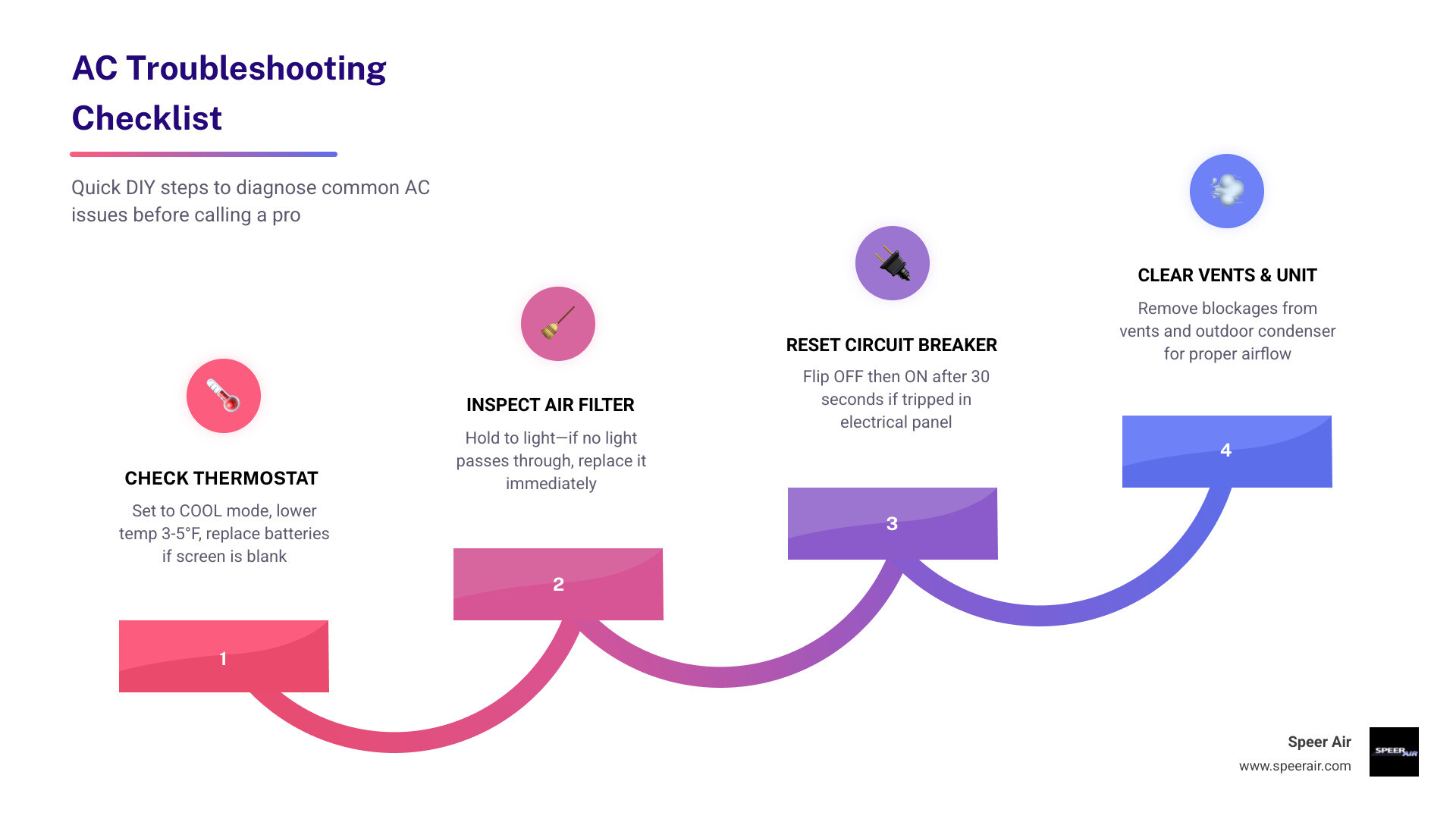
- Check the thermostat – Make sure it’s set to COOL and the temperature is at least 3-5 degrees below the current room temperature. Replace the batteries if the screen is blank.
- Inspect the air filter – Hold it up to a light. If you can’t see light through it, replace it. A clogged filter is the cause of roughly 9 out of 10 underperforming AC service calls.
- Reset the circuit breaker – Locate your electrical panel and look for a tripped breaker. Flip it fully to OFF first, wait 30 seconds, then flip it back to ON.
- Check the indoor power switch – There’s often a switch near the air handler that looks like a standard light switch. Make sure it’s on.
- Clear the vents – Walk through your home and confirm that no furniture, rugs, or curtains are blocking supply or return vents.
- Inspect the outdoor unit – Check that the fan is spinning and that leaves, dirt, or overgrown plants aren’t blocking airflow around the condenser.
- Look for ice or water – If you spot ice on the refrigerant lines or standing water near the indoor unit, turn the system off and call a professional.
Most AC problems feel urgent the moment they happen — particularly in the middle of summer in Rockaway, NJ, when outdoor temperatures are climbing and your home is heating up fast. But the good news is that a surprisingly large number of AC issues come down to something simple: a dirty filter, a tripped breaker, or a thermostat accidentally switched to the wrong mode.
In fact, according to HVAC industry data, nine out of ten service calls for central air units not performing well trace back to a dirty air filter — a fix that takes minutes and costs next to nothing. That’s not a reason to skip calling a pro when you truly need one. It’s a reason to spend five to ten minutes checking the basics first, so you’re not paying a diagnostic fee for something you could have solved yourself.
This guide walks you through the most effective ac troubleshooting tips before calling a professional, clearly explains where DIY ends and where professional expertise must begin, and helps you protect your system and your wallet in 2026.
Essential AC Troubleshooting Tips Before Calling a Professional

When your home starts feeling more like a sauna than a sanctuary, it’s easy to panic. However, many cooling issues are solved by empowering yourself with basic diagnostic knowledge. Understanding the components of your central AC system—which includes the indoor air handler (with its evaporator coil and blower) and the outdoor condensing unit (housing the compressor and fan)—is the first step toward effective troubleshooting.
By taking just a few minutes to play detective, you can often identify the culprit behind a system that won’t turn on or isn’t cooling effectively. If you’ve ever wondered Why Is My Ac Not Cooling My Rockaway Home/, you might be surprised to find the answer is closer than you think.
Checking Your Thermostat Settings and Power Supply
The thermostat is the “brain” of your HVAC system. If the brain isn’t sending the right signals, the body won’t move. Start by ensuring the thermostat is set to “Cool” rather than “Heat” or “Fan Only.” It sounds simple, but during seasonal transitions in New Jersey, it’s incredibly common for a system to be accidentally left in the wrong mode.
If your thermostat screen is blank, the issue might just be dead batteries. Most modern thermostats use AA or AAA batteries that should be replaced annually. If the screen is on but the system won’t kick in, try lowering the temperature setting by 5 degrees below the current room temperature to trigger a cooling cycle.
If the thermostat is fine but the unit still won’t budge, check your electrical panel. AC units are heavy power users, and it’s common for a circuit breaker to trip during a 2026 heatwave when the grid and your system are under maximum load. If you find a tripped breaker, flip it all the way to “Off” before flipping it back to “On.” However, if it trips again immediately, do not keep resetting it. This is a safety feature signaling a deeper electrical fault. For more details, explore Why Ac Might Be Tripping Your Circuit Breaker/.
Applying AC Troubleshooting Tips Before Calling a Professional to Your Airflow
Airflow is the lifeblood of your cooling system. If the air can’t move, the system can’t remove heat from your home. The single most important maintenance task for any homeowner is checking the air filter.
Whether you use a standard 1-inch pleated filter or a high-efficiency 4-inch media filter, a clog will eventually occur. A dirty filter restricts airflow, forcing your blower motor to work harder and potentially causing your evaporator coils to freeze. We recommend checking 1-inch filters every month, especially if you have pets or live near construction in areas like Morris County.
Beyond the filter, perform a “vent audit.” Ensure that supply registers and return grilles are not blocked by furniture, heavy drapes, or rugs. Even if the AC is running perfectly, blocked vents can lead to uneven temperatures and increased pressure within your ductwork. If you notice weak air coming from your vents, see our guide on Troubleshooting Poor Airflow From Hvac Vents/.
Outdoor Unit Maintenance and Inspection
The outdoor unit, or condenser, is responsible for releasing the heat collected from inside your home. Because it sits outside year-round, it is vulnerable to the elements. Dirt, grass clippings, mulch, and fallen leaves can accumulate on the delicate metal fins, acting like a blanket that traps heat.
Cleaning the Outdoor Condenser Unit Safely
Before you perform any maintenance on the outdoor unit, turn off the power at the dedicated disconnect switch (usually located in a small box on the wall near the unit). Once the power is off, you can safely remove large debris by hand.
Use a standard garden hose with a gentle spray to rinse the coils from top to bottom. Never use a pressure washer, as the high-pressure stream can flatten the aluminum fins, permanently restricting airflow. Ensure there is at least a 2-foot “clearance zone” around the unit—this means trimming back shrubs and moving any stored items. This simple step can prevent the system from blowing warm air. For a deeper dive into this issue, read The Cold Hard Truth About Why Your Ac Is Blowing Warm Air/.
| Task | DIY Effort | Professional Service |
|---|---|---|
| Debris Removal | Clear leaves and grass by hand | Included in annual tune-up |
| Surface Cleaning | Gentle rinse with garden hose | Chemical deep-clean of coils |
| Fin Alignment | Not recommended for DIY | Straightening bent fins with specialized combs |
| Clearance | Trim bushes (2-foot radius) | Advice on landscaping for airflow |
AC Troubleshooting Tips Before Calling a Professional: When to Stop
While we want you to feel confident in maintaining your home, there is a clear line where DIY becomes dangerous. AC systems involve high-voltage electricity and pressurized refrigerant.
You should never attempt to open the electrical cabinets of the unit or handle refrigerant lines. Handling refrigerant requires EPA Section 608 certification because it is a controlled substance that can cause severe frostbite or environmental damage if mishandled. Additionally, attempting “unauthorized” repairs on internal components can void your manufacturer’s warranty. If you suspect a leak, it’s time to look into Ac Refrigerant Leak Issues In Your Home/ and call a NATE-certified technician.
Recognizing Critical Warning Signs and Safety Hazards
Sometimes, the system gives you very clear signals that it is in distress. Ignoring these signs can turn a minor repair into a total system replacement.
Identifying Water Leaks and Frozen Coils
If you see water pooling around your indoor air handler, you likely have a clogged condensate drain line. As the AC removes humidity from the air, the water must go somewhere. Over time, algae and “slime” can build up in the PVC drain pipe. Many modern systems have a “float switch” that will shut the system down if it detects water backing up to prevent a flood. You can sometimes clear a minor clog using a wet/dry vacuum on the outdoor end of the drain line.
Another visual warning is “Summer Frost.” If you see ice on the copper refrigerant lines or the indoor evaporator coil, turn the system off immediately. Running a frozen system can destroy the compressor. Ice is usually caused by restricted airflow (dirty filters) or low refrigerant. For localized advice, see Fixing Water Leaks From Your Ac Unit/.
Mechanical Failures and Short Cycling
Listen to your unit. A healthy AC should run with a steady hum. If you hear hissing, it could indicate a refrigerant leak. Grinding or clanging often points to a loose component or a failing motor.
“Short cycling”—where the unit turns on and off rapidly every few minutes—is another red flag. This puts immense strain on the compressor, which typically draws between 8 to 10 amps when healthy. Short cycling can be caused by anything from an oversized unit to a failing capacitor. If your system is behaving this way, check Why Ac Might Be Short Cycling And How To Fix It/ and What Your Ac Is Trying To Tell You With Those Weird Noises/.
The Role of Professional Maintenance in System Longevity
While the ac troubleshooting tips before calling a professional mentioned above are excellent for day-to-day management, they don’t replace the need for an expert eye. The average HVAC lifespan is about 15 to 20 years, but frequent minor breakdowns usually begin appearing by year 12. Regular maintenance can push those boundaries and keep your system running at peak efficiency.
Preventing Future Breakdowns in 2026
In 2026, energy efficiency is more important than ever. Did you know that approximately 30% of the energy in ducted systems can be lost due to leaks or poor layout? Or that missing suction line insulation can spike your energy bills by 10% a month?
Professional maintenance goes beyond cleaning; it involves calibrating the system, checking refrigerant levels with specialized tools, and ensuring the indoor air quality is optimal for your family. By catching small issues during a spring tune-up, you avoid the “emergency” call in the middle of a July heatwave. Learn more about the Top 10 Signs You Need Air Conditioning Repair/ and the specific Signs You Need Hvac Repair In Rockaway/.
Frequently Asked Questions
What should I check first if my AC won’t turn on?
Always start with the thermostat and power supply. Ensure the thermostat has fresh batteries and is set to “Cool.” Next, check your electrical panel for a tripped circuit breaker and look for the “emergency shut-off” switch near your indoor furnace or air handler. This switch often looks like a light switch and can be accidentally flipped. For a step-by-step guide, use our Hvac Troubleshooter/.
Why is my AC blowing warm air even though it’s running?
This is often caused by a lack of airflow. Check your air filter first—if it’s clogged, the system can’t cool. Next, inspect the outdoor unit for debris or plant growth that might be blocking the coils. Finally, check your thermostat’s “Fan” setting. If it is set to “On” instead of “Auto,” the fan will blow air continuously, even when the cooling cycle is off, making the air feel lukewarm. Review Why Is My Ac Not Cooling My Rockaway Home/ for more tips.
Is it safe to thaw a frozen AC unit myself?
Yes, you can thaw the unit, but you should not try to fix the underlying cause if it’s mechanical. Turn the thermostat to “Off” but set the “Fan” switch to “On.” This circulates warm air over the coils to melt the ice naturally. Place towels around the indoor unit to catch any meltwater. Do not try to scrape or chip the ice off, as you will likely puncture the delicate coils. Once thawed, check the filter. If the ice returns, see What To Do When Hvac Freezes In Maplewood/.
Conclusion
At Speer Air, we believe an informed homeowner is a happy homeowner. While these ac troubleshooting tips before calling a professional can help you resolve simple issues and save money, we are always here when the job requires a professional touch.
Serving Northern New Jersey and parts of Pennsylvania since 1900, we bring over a century of expertise to every home. Whether you are in Rockaway, Denville, or anywhere in Morris, Essex, or Sussex Counties, our NATE-certified technicians are ready to help. As a Carrier Factory Authorized Dealer and a Generac® Dealer, we provide the high-quality service your home deserves.
If your troubleshooting hasn’t solved the problem, or if you’ve spotted one of the critical warning signs mentioned above, don’t wait for the heat to become unbearable.
Schedule your professional air conditioning service in Rockaway today