

Why Understanding How Maintenance Prevents Compressor and Coil Damage Could Save You Thousands
Understanding how maintenance prevents compressor and coil damage is one of the most valuable things you can do as a homeowner in Northern New Jersey. When your AC stops cooling on a sweltering July afternoon, the compressor is often the culprit — and replacing it is one of the most expensive repairs you’ll face.
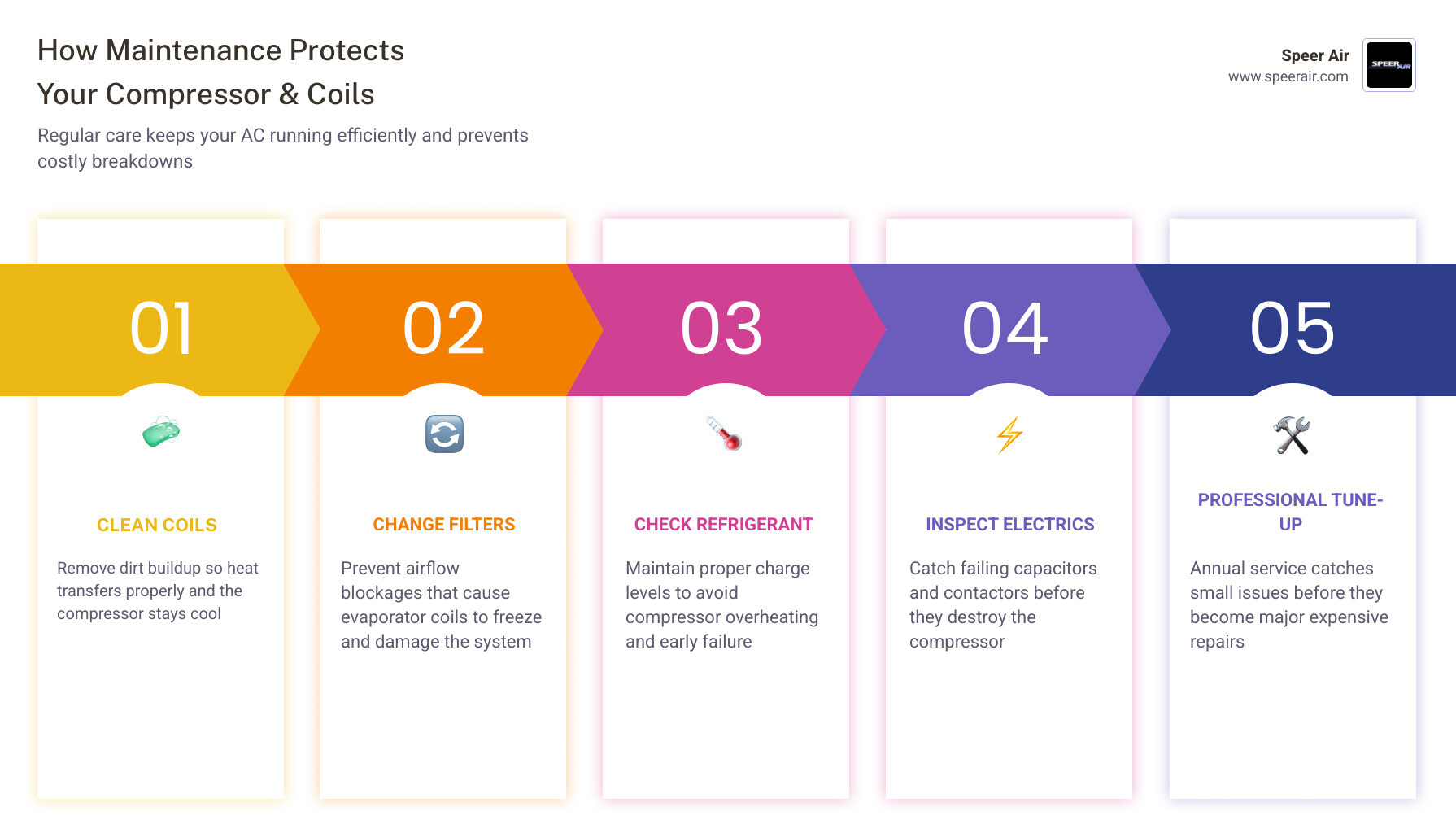
Here’s the short answer to how regular maintenance protects your system:
- Clean coils allow proper heat transfer, reducing strain on the compressor
- Regular filter changes prevent airflow blockages that cause evaporator coils to freeze
- Refrigerant checks stop low charge conditions that force the compressor to overwork
- Electrical inspections catch failing capacitors and contactors before they damage the compressor
- Lubrication checks prevent moving parts from wearing out prematurely
- Professional tune-ups (once or twice a year) identify small problems before they become expensive failures
The compressor is the heart of your AC system. When coils get dirty or airflow gets blocked, the compressor works harder, runs hotter, and wears out faster. A well-maintained system can last around 15 years. A neglected one often fails much sooner — at exactly the wrong time.
For homeowners and businesses in Rockaway, Denville, and across Morris County, the combination of hot, humid summers and cold winters means your HVAC system earns its keep year-round. That makes preventive maintenance not just smart — it’s essential.
The Critical Role of the Compressor and Coils in Your AC
To understand how maintenance prevents compressor and coil damage, it helps to know how these parts work together to cool your home. Your air conditioner does not actually “create” cold air; instead, it removes heat from inside your house and dumps it outdoors. This thermodynamic magic relies entirely on a continuous refrigerant cycle.
The process is managed by three primary components:
- The Evaporator Coil: Located inside your home (usually near the furnace or air handler), this coil contains cold, low-pressure liquid refrigerant. As warm indoor air blows across the coil, the refrigerant absorbs the heat, turning into a gas.
- The Compressor: Located in the outdoor unit, the compressor acts as the pump—or the “heart”—of the system. It draws in the warm refrigerant gas, compresses it into a high-pressure, high-temperature vapor, and pushes it along.
- The Condenser Coil: Also located outdoors, this coil receives the hot gas from the compressor. A fan blows outdoor air across the condenser coil, releasing the absorbed heat into the outside atmosphere and turning the refrigerant back into a liquid to repeat the cycle.
You can learn more about this entire process in our guide on The Big Three: How the Compressor, Evaporator and Condenser Function.

If either the evaporator or condenser coils become dirty, or if the compressor loses its lubrication or electrical stability, this delicate heat transfer cycle breaks down. The compressor is forced to run continuously at elevated pressures and temperatures, which drastically shortens its lifespan.
How Maintenance Prevents Compressor and Coil Damage
When you neglect scheduled maintenance, your air conditioner has to work twice as hard to achieve the same level of comfort. Dirt, dust, and outdoor debris act as insulating blankets over your coils, restricting airflow and choking the heat exchange process.
Scheduling Regular AC Maintenance for Your Home Comfort ensures that every component is clean, calibrated, and operating within its designed limits.
| AC Component | Impact of Regular Maintenance | Consequences of Neglect |
|---|---|---|
| Compressor | Cool operating temperatures, balanced electrical load, proper lubrication. | Overheating, mechanical wear, electrical burnout, complete failure. |
| Condenser Coil | Clean aluminum fins, unrestricted heat rejection, lower operating pressure. | Dirt buildup, trapped heat, soaring energy bills, compressor strain. |
| Evaporator Coil | Unobstructed airflow, efficient heat absorption, dry and mold-free surface. | Ice buildup, blocked airflow, mold growth, liquid refrigerant floodback. |
| Air Filters | Consistent airflow, clean coils, balanced system pressures. | Frozen coils, restricted air, system short-cycling, dirty indoor air. |
Cleaning Coils to Stop Heat Buildup and Strain
Your outdoor condenser coil is constantly exposed to the elements. Over the course of a New Jersey spring and summer, it accumulates pollen, grass clippings, leaves, dirt, and spiderwebs. This debris forms a barrier that prevents heat from escaping the refrigerant.
When heat cannot dissipate, the refrigerant leaving the condenser remains too hot. This forces the compressor to pump at much higher pressures to move the refrigerant through the cycle. High pressures mean high temperatures—often pushing the compressor’s discharge line temperature past its safe limit of 225°F. At these extreme temperatures, the protective compressor oil begins to break down, leading to rapid mechanical wear.
You can prevent this destructive cycle and Beat the Heat by Scheduling Your Annual AC Maintenance Early before the summer workload peaks.
Maintaining Airflow to Prevent Frozen Evaporator Coils
While the outdoor coil deals with dirt and leaves, the indoor evaporator coil is highly sensitive to indoor dust and pet dander. If your air filter is dirty or clogged, the volume of warm air passing over the evaporator coil drops significantly.
Without enough warm air to absorb, the temperature of the evaporator coil drops below freezing. The moisture in your indoor air condenses on the cold metal and freezes instantly, turning your evaporator coil into a solid block of ice.
This is highly dangerous for your compressor. When the coil freezes, the refrigerant inside cannot absorb heat and remain in a gaseous state. Instead, liquid refrigerant travels back down the suction line directly into the compressor. Because liquids cannot be compressed, this “liquid floodback” can instantly destroy the compressor’s internal valves, pistons, or scrolls.
If you suspect your system is struggling with ice, read about our Solutions for Frozen Evaporator Coils in AC System to protect your equipment from sudden failure.
Common Causes of Compressor Failure and How to Avoid Them
Compressors rarely fail on their own. Instead, they are usually “murdered” by external factors like electrical faults, lack of lubrication, or incorrect refrigerant levels. Identifying these issues early can save your system. If your outdoor unit is starting to make unusual clicking, rattling, or buzzing sounds, find out Why AC Compressor Might Be Making Loud Noises before the unit stops working altogether.
How Maintenance Prevents Compressor and Coil Damage From Electrical Surges
Your compressor relies on a steady, balanced supply of electrical power. The most common electrical failures involve the capacitor and the contactor:
- The Capacitor: This small, cylindrical component stores electrical energy to assist the compressor during startup and keep it running smoothly. Over time, heat and electrical surges degrade the capacitor. If it weakens, the compressor will struggle to start, drawing high currents that can burn out the motor windings.
- The Contactor: This is the switch that sends power to the compressor. Over years of cycling, the contactor points can pit, burn, or weld together, causing voltage drops or forcing the compressor to run continuously without stopping.
Routine maintenance includes testing these components with a multimeter. Replacing a weak capacitor during a scheduled visit prevents a sudden breakdown and protects the compressor from electrical damage. Learn more about the Top 10 Signs You Need Air Conditioning Repair to catch these electrical warning signs early.
How Maintenance Prevents Compressor and Coil Damage From Low Refrigerant
Your AC system is a closed loop; it should never lose refrigerant. If the refrigerant level is low, it means there is a leak in the coils or copper lines.
Low refrigerant levels are incredibly dangerous for the compressor. The compressor motor relies on the cool, returning refrigerant gas to keep its internal temperature down. When refrigerant is low, the compressor runs continuously to cool your home, but without enough cool gas to self-cool, it quickly overheats.
Furthermore, moisture can enter a leaking system. When moisture mixes with refrigerant and oil under high heat, it forms highly corrosive acids. These acids eat away at the motor windings, causing an electrical burnout that ruins the compressor. Keeping refrigerant levels precise is The Secret to Lower Energy Bills and Zero Summer Breakdowns.
Essential Maintenance Steps for Homeowners and Professionals
Protecting your air conditioner requires a combination of simple homeowner habits and specialized professional service. For those living in Northern New Jersey, following dedicated AC Maintenance Tips for Maplewood Residents and surrounding communities ensures your system is always ready for seasonal weather shifts.
DIY Tasks to Protect Your System
As a homeowner, you can perform several simple, highly effective tasks to keep your AC running smoothly:
- Change Your Air Filters: Check your filter every month during peak cooling season and replace it at least every 90 days (or every 30 days if you have pets or high dust levels).
- Clear Outdoor Debris: Maintain at least 2 feet of clear space around your outdoor condenser unit. Trim back bushes, weeds, and branches, and sweep away fallen leaves.
- Clean the Condensate Drain: Flush your drain line periodically with warm water or vinegar to prevent algae buildup and water damage.
- Avoid Using Tarps or Tight Covers: Do not cover your outdoor unit with a plastic tarp or tight winter cover. These trap moisture inside, causing rust, corrosion, and electrical damage.
- Listen and Observe: Pay attention to any new noises, warm air blowing from vents, or sudden increases in your monthly utility bills.
What Happens During a Professional Tune-Up
While DIY care is essential, professional technicians have the specialized tools and training required to inspect the parts of your system you cannot see.
Scheduling The Importance of Regular AC Service in Rockaway ensures a certified technician will:
- Test Electrical Components: Measure capacitor capacitance, check contactor points for pitting, and tighten loose electrical connections to prevent voltage drops.
- Verify Refrigerant Charge: Measure superheat and subcooling levels to ensure the system is charged exactly to manufacturer specifications.
- Inspect and Clean Coils: Chemically clean both the evaporator and condenser coils to remove deeply embedded dirt, and use a fin comb to straighten bent aluminum fins.
- Check Lubrication Levels: Ensure the compressor oil is clean, acid-free, and properly lubricating all moving parts.
- Examine Safety Controls: Test high-pressure and low-pressure safety switches to guarantee the system will shut down safely in an emergency rather than damaging the compressor.
Frequently Asked Questions About AC Compressor and Coil Care
What are the warning signs that my AC compressor is failing?
A failing compressor usually gives several warning signs before it breaks down completely:
- Warm air blowing from your vents: The compressor can no longer pump refrigerant effectively, leaving the air uncooled.
- Strange, loud noises: Squealing, grinding, or loud rattling sounds from the outdoor unit often indicate failing internal bearings or mechanical parts.
- Hard starting or short-cycling: If the compressor struggles to turn on, stutters, or shuts off quickly after starting, the capacitor or the compressor itself may be failing.
- Frequent circuit breaker trips: A worn-out compressor motor may draw excessive electrical current, causing your home’s circuit breaker to trip repeatedly.
How often should AC coils be cleaned?
For most homes in Northern New Jersey, AC coils should be cleaned at least once a year, ideally during a spring maintenance visit before the summer heat arrives. However, if you live in an area with high pollen, cottonwood trees, heavy dust, or near salt air, your coils may require cleaning twice a year to prevent system strain and maintain efficiency.
Can a dirty air filter really damage my compressor?
Yes, absolutely. A dirty air filter restricts airflow across the indoor evaporator coil. Without sufficient airflow, the coil’s temperature drops rapidly, causing it to freeze. This ice block prevents the refrigerant from boiling into a gas, resulting in liquid refrigerant returning down the suction line to the compressor. Because liquid cannot be compressed, this liquid floodback can cause catastrophic and permanent mechanical damage to your compressor.
Conclusion
Your air conditioner is a major investment in your home’s comfort, and the compressor and coils are its most critical components. By understanding how maintenance prevents compressor and coil damage, you can avoid unexpected breakdowns, lower your energy bills, and keep your system running reliably for up to 15 years.
At Speer Air, we have been keeping Northern New Jersey comfortable since 1900. Our NATE-certified technicians bring over 120 years of family business heritage, technical expertise, and Carrier Factory Authorized Dealer standards to every job. Whether you need a quick spring tune-up or a comprehensive system inspection, we are here to help.
Don’t wait for the first heatwave to find out if your system is ready. Schedule your Professional AC Maintenance in Rockaway with Speer Air today and keep your home cool all summer long!