

Why Electrical Panel Safety Checks Are Mandatory Before Winter Heating Upgrades
The Hidden Link Between Winter Heating Upgrades and Breaker Box Safety Your old heating equipment is finally being replaced, but before the new unit can be installed, your technician mandates one non-negotiable step: electrical panel safety checks. Many homeowners focus entirely on the shiny new HVAC equipment—comparing efficiency ratings, smart thermostats, and variable-speed blowers—while completely overlooking the power source required to run it. Adding high-draw winter heating appliances to an aging or maxed-out electrical panel creates a severe bottleneck. If your home’s electrical infrastructure cannot support the new load, you risk continuous breaker trips, premature equipment damage, and serious hidden safety hazards. To fully understand how to maximize your Northeast heating benefits, you must first ensure your home has the foundational power to support them. The Pre-Winter Upgrade Rush During late fall and pre-winter heating upgrades, HVAC technicians frequently encounter homes with outdated electrical systems. A typical pattern we see is a homeowner upgrading from a basic, older furnace to a modern, high-efficiency system, only to discover their basement breaker box is decades behind current technology. This foundational assessment is not an upsell; it is a strict requirement to ensure the home’s infrastructure can support the new load safely. Installing heavy-duty heating systems on an outdated panel is like putting a massive, high-performance engine into a car with failing brakes—it might run, but it is not safe. A proper electrical assessment guarantees that your newly ...
What Happens to Plumbing When Guests Visit: A Thanksgiving Preparation Checklist
The Hidden Strain on Your Home’s Water Systems During the Holidays The day after Thanksgiving is historically the busiest day of the year for emergency plumbing calls across the country. If you want to know exactly what happens to plumbing when guests visit, the short answer is that residential systems designed for three to four people suddenly struggle to handle the rapid, concentrated load of eight to ten individuals. Your home’s hidden network of supply lines, drains, and heating elements operates on a delicate balance of pressure and capacity. When that balance is disrupted by a sudden influx of houseguests, the weaknesses in your system become glaringly obvious. Most homeowners do not realize that their plumbing is under stress until a fixture backs up or the shower runs ice cold. The key to a smooth holiday weekend is identifying vulnerable fixtures and understanding your water heater’s capacity limits early. A proactive approach prevents cold showers, overflowing toilets, and frantic calls to a technician while the turkey is in the oven. Reading through a comprehensive water heater buying guide can help you understand the baseline requirements for a household of your size, but preparing for a sudden spike requires looking at your system as a whole. By late November, your home is already working harder to maintain baseline comfort levels. When you add the demands of extended family, extra laundry cycles, constant toilet flushing, and heavy kitchen prep, the strain multiplies. ...
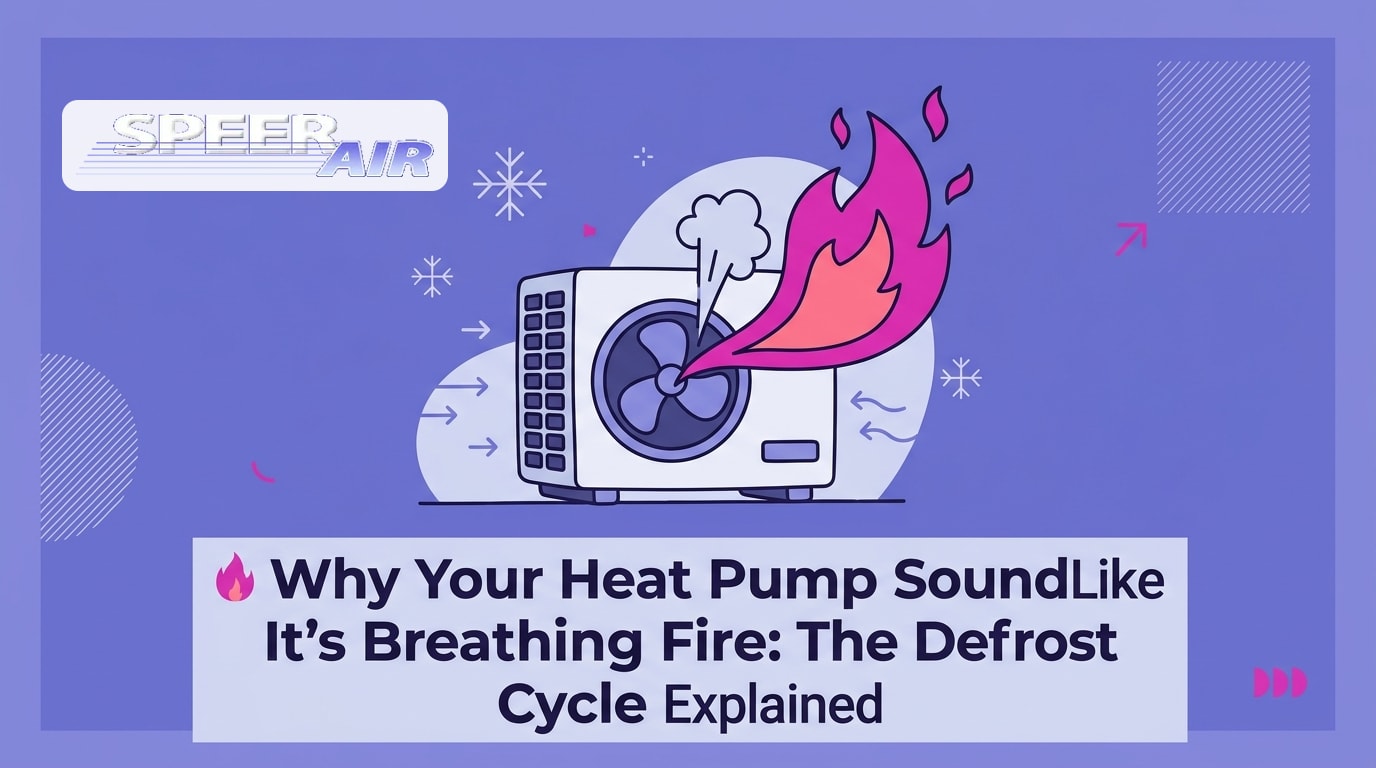
Why Your Heat Pump Sounds Like It’s Breathing Fire: The Defrost Cycle Explained
The First Deep Freeze: Decoding the Sudden Whoosh and Steam At Speer Air, our team fields dozens of frantic late-night calls every November when the first major cold snap hits Rockaway. Before that deep freeze arrives, having the heat pump defrost cycle explained is the easiest way to prevent a midnight panic when your system suddenly changes its tune. The temperature drops, the house is quiet, and then you hear it: a loud, mechanical whoosh from outside, followed by a sound like a jet engine winding down. You look out the window and see a thick cloud of steam or water vapor rising from the outdoor unit. In that moment, you have to decide whether to grab your phone for an emergency service call or simply go back to sleep. The short answer is that your system is likely doing exactly what it was designed to do. To truly understand your system, reviewing heat pump mechanics is a great first step, and knowing when to actually call for heat pump repair in Rockaway will save you unnecessary stress. Understanding the Baseline Operation Heat pumps do not create heat by burning fuel; they move existing heat from one place to another. Even when it feels freezing outside, there is still thermal energy in the air. Your outdoor unit acts as a giant sponge, absorbing that ambient heat and pumping it inside ...
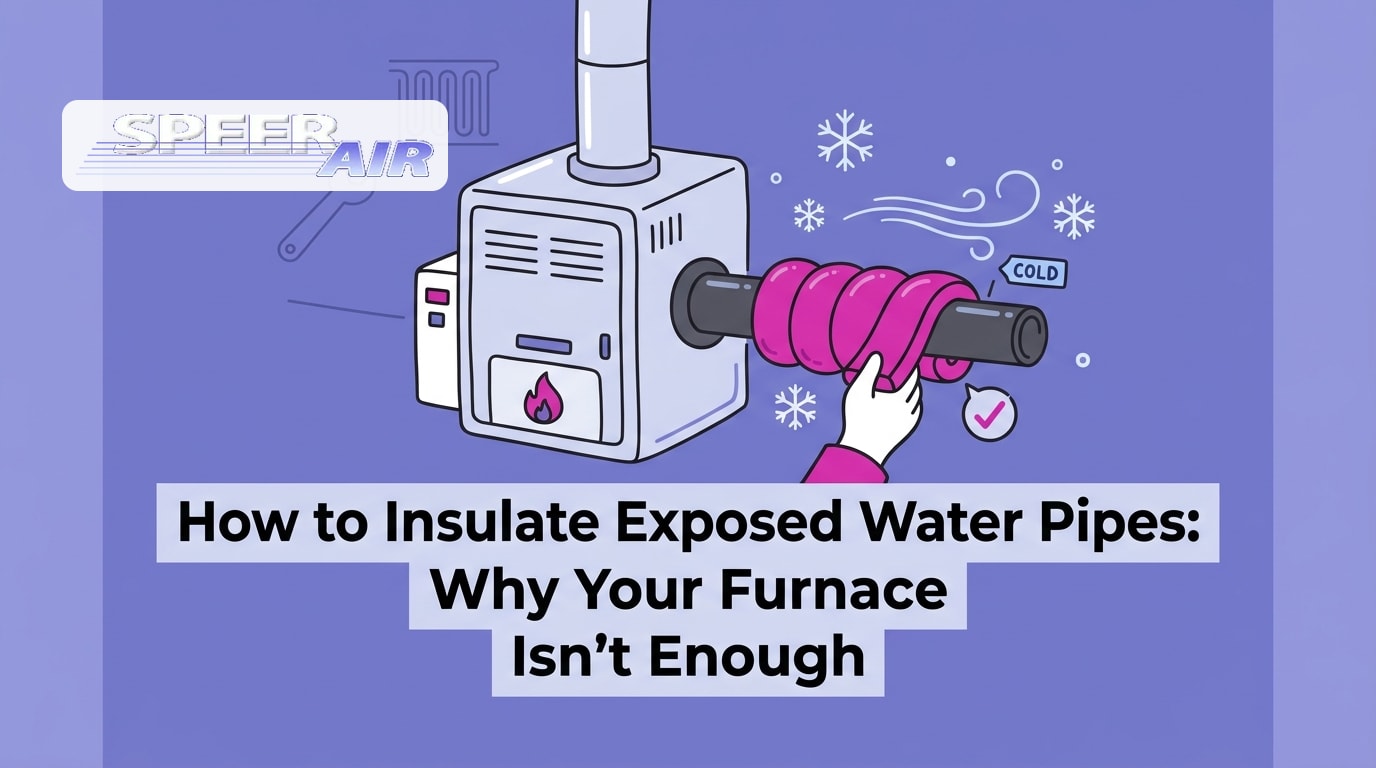
How to Insulate Exposed Water Pipes: Why Your Furnace Isn’t Enough
The Hidden Danger to Exposed Pipes Before Winter Hits Your furnace is running steadily, pushing warm air through the vents, yet a sudden drop in water pressure warns you that a line in the basement has frozen solid. If you are wondering how to insulate exposed water pipes, you are already on the right track to preventing this exact scenario. A common misconception among homeowners is that an active central heating system keeps the entire basement warm enough to protect the plumbing. Unfortunately, as temperatures drop outside, the exposed pipes in your basement and crawlspaces become highly vulnerable to freezing and bursting, regardless of how hard your heater works. For comprehensive Northeast winter property preparation, including avoiding the need for emergency heating repair in Rockaway, NJ, addressing these vulnerable plumbing lines is a critical first step. A compromised boiler line or a burst water pipe can quickly flood your utility space, shutting down your heating equipment right when you need it most. With over a century of experience—founded in 1900—helping New Jersey homeowners, our team has seen exactly how and where homes freeze up when ambient heat fails. Achieving true November pre-winter readiness means looking beyond your thermostat and taking proactive steps to protect your plumbing infrastructure before the first hard freeze arrives. Why a Running Furnace Doesn’t Guarantee Pipe Safety It is easy to assume that because your basement feels relatively mild near the ...
Standby Generator Pre Blizzard Inspection Checklist: What Professionals Look For
The Hidden Risks of Winter Power Outages for Standby Generators With November here and the first major Northeast snowstorms just weeks away, executing a professional standby generator pre blizzard inspection checklist is the most critical step to protect your home. You rely on your backup power system to keep the lights on and the heat running when heavy ice brings down the grid. But what happens if your unit fails to start when temperatures drop below freezing? Finding out your system is compromised during a blackout is too late. That is why following this checklist is the cornerstone of your late fall / November pre-winter prep. Preparing for navigating Northeast winter HVAC challenges means looking at your home as a complete ecosystem. Securing your backup power is just as urgent as scheduling your Rockaway heating repair services before the deep freeze hits. Speer Air has been serving this community since 1900. With well over a century of experience navigating severe New Jersey winters, our team knows exactly what it takes to keep a home safe and warm when the power grid goes down. In our daily service calls throughout Rockaway, we routinely see homeowners assume their generator is ready simply because the green light on the exterior housing is illuminated. However, a green light only indicates that the control board has power. It does not mean the internal battery has enough cold-cranking amps to turn the engine over in zero-degree weather, nor does it guarantee ...
The Physics of a Burst Pipe: Preventing Frozen Pipes in Unheated Spaces
The Hidden Danger of Early Winter Deep Freezes Before the first major frost settles in, November pre-winter readiness becomes the most critical factor in preventing frozen pipes in unheated spaces. At Speer Air, our technicians frequently see homeowners operate under a false sense of security during the early weeks of the season. Because the living room feels perfectly comfortable and the thermostat reads a cozy 70°F, it is easy to assume that the entire house is protected from the dropping temperatures outside. However, the real danger lies just beneath the floorboards, in the drafty, uninsulated environments where critical plumbing infrastructure is often hidden away. The physics of cold weather plumbing failures are complex and unforgiving. When freezing air infiltrates a vulnerable space, it initiates a chain reaction of pressure buildup and ice expansion inside the water lines. This hidden mechanical process happens silently, often culminating in a catastrophic rupture before the homeowner even realizes there is a problem. Understanding these precise mechanics is what justifies proactive professional winterization long before the first deep freeze hits the region. Protecting a home requires more than simply wrapping a few exposed pipes in foam. True winterization involves a holistic approach to building science, recognizing that maintaining ambient heat in the lower levels of a home is just as important as insulating the plumbing itself. By addressing these vulnerabilities early, you can secure your property against sudden seasonal damage. If your heating system is struggling to maintain that necessary ...