

How a Tune Up Extends the Life of Your AC System — And Why It Matters in Northern New Jersey
Understanding how a tune up extends the life of your AC system starts with one simple idea: small preventative steps today prevent major failures tomorrow. A well-maintained air conditioner can last 10 to 15 years. A neglected one may give out in as few as 8 to 10 years — sometimes right in the middle of a New Jersey heat wave, when HVAC technicians are busiest and emergency repairs cost the most.
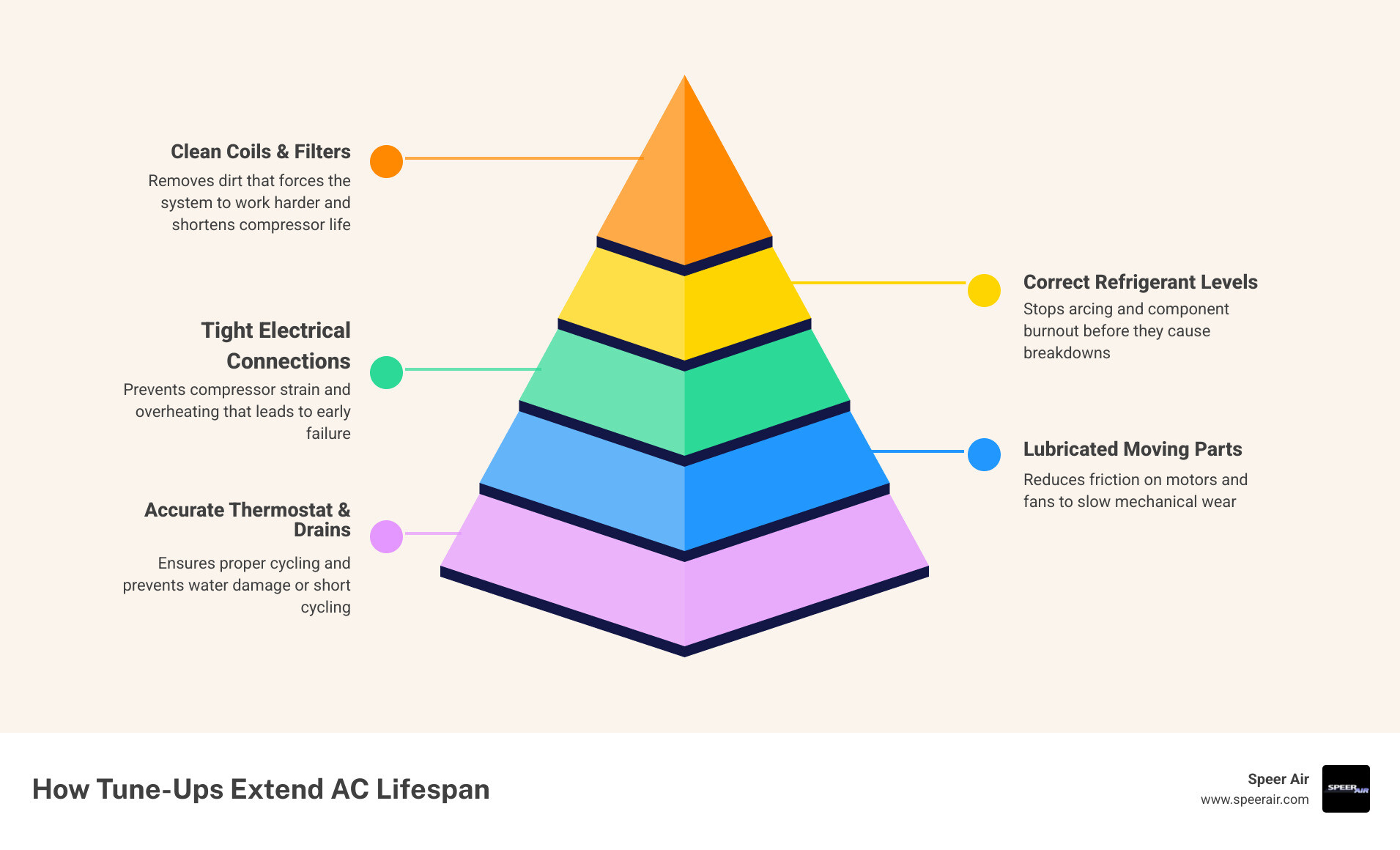
Here’s a quick look at how regular tune-ups extend your AC’s lifespan:
- Reduces wear on the compressor by keeping coils clean and refrigerant levels correct, so the system doesn’t overwork itself
- Catches failing components early — like run capacitors and worn electrical connections — before they cause a full breakdown
- Restores lost efficiency from dirty filters and fouled coils, cutting down on the long run times that accelerate aging
- Clears condensate drains to prevent moisture damage and system shutdowns
- Verifies refrigerant charge so the compressor isn’t straining under a low-charge condition
- Lubricates moving parts to reduce friction and mechanical wear over time
- Ensures thermostat accuracy so the system cycles correctly and doesn’t run longer than needed
Think of it the same way you think about oil changes for your car. Skip them long enough, and small friction becomes serious engine damage. Your AC is no different — it’s made up of hundreds of components working together, and gradual wear is invisible until it isn’t.
For homeowners and businesses in Rockaway, Denville, and throughout Morris County and Northern New Jersey, scheduling an annual tune-up before cooling season is one of the smartest investments you can make in your home comfort system.
What is an AC Tune-Up vs. Basic Maintenance?
When homeowners hear the word “maintenance,” they often picture simple chores like swapping out a dirty air filter or sweeping away dried leaves from the outdoor unit. While these quick DIY tasks are incredibly important for keeping your system running smoothly day-to-day, they represent only a fraction of what your cooling system actually needs to survive the long haul.
To keep your home comfortable year-round, it helps to understand the difference between basic upkeep and a comprehensive professional tune-up. Basic maintenance is what you do to keep the air flowing on a weekly or monthly basis. A professional tune-up, on the other hand, is an in-depth, multi-point inspection and optimization process performed by a certified technician.
Think of basic maintenance as washing your car and checking the windshield wiper fluid, while a professional tune-up is the comprehensive mechanical service where a technician hooks up diagnostic computers, tests the electrical circuits, and ensures the engine is calibrated to factory specifications. Both are necessary, but only one ensures the mechanical integrity of your system over a decade of heavy use. Investing in Regular AC Maintenance for Your Home Comfort bridges the gap between simple daily operation and long-term mechanical reliability.
How a Tune-Up Extends the Life of Your AC System Beyond Simple Filter Changes
While changing your air filter every 30 to 90 days prevents dust from choking your system’s airflow, a dirty filter is only one of many hurdles your air conditioner faces. As the summer months roll in, your cooling system handles immense electrical and physical stress. This is where a professional tune-up makes a massive difference in your system’s life expectancy.
During a professional visit, a licensed technician goes deep under the hood to manage critical factors that homeowners simply cannot handle without specialized training and tools:
- Refrigerant Level Verification: If your system has even a tiny, slow refrigerant leak, it forces the compressor to work twice as hard to cool your home. Technicians measure superheat and subcooling levels to ensure the charge is exact.
- Electrical Connection Tightening: Loose wires can lead to electrical resistance, sparking, or fried control boards. A professional inspects and tightens every electrical terminal.
- System Calibration: Your thermostat must communicate flawlessly with your air handler and outdoor condenser. Technicians calibrate these controls so your system doesn’t run longer or cycle more frequently than necessary.
Understanding What Happens During an AC Tune-Up: Step-by-Step Guide reveals the sheer amount of technical precision required to keep these heavy-duty machines running safely and efficiently.
How a Tune Up Extends the Life of Your AC System
An air conditioner does not typically die from old age all at once. Instead, it suffers from a slow, compounding buildup of stress. Every speck of dust on a coil, every loose wire, and every drop of lost refrigerant acts as a tiny weight added to the system. Eventually, the weight becomes too heavy, and a critical component—usually the incredibly expensive compressor—fails completely.
This is exactly how a tune up extends the life of your AC system: by systematically removing those weights before they can cause permanent damage. When we clean the condenser coils, we directly reduce the pressure and heat inside the compressor. When we lubricate the blower motor, we eliminate the friction that causes the motor to overheat and burn out. By keeping the system operating under optimal, low-stress conditions, we delay the wear and tear that leads to premature replacement. This ongoing battle is why we emphasize Maintenance vs. Neglect: The Battle for Your AC’s Life — it is a direct choice between protecting your investment or letting it quietly degrade.
How a Tune Up Extends the Life of Your AC System by Preventing Component Failures
To understand why a tune-up is so effective, we have to look at the anatomy of a failure. The single most common component to fail during a New Jersey heat wave is the run capacitor. The capacitor acts like a temporary battery, providing the electrical boost your compressor and fan motors need to start up and run.
Over time, summer heat causes capacitors to degrade and lose their capacitance (measured in microfarads). If a technician doesn’t test the capacitor during a spring tune-up, a weakened capacitor will continue to struggle. On a hot July afternoon, that weak capacitor will fail to start the compressor. The compressor will then sit there, humming and drawing massive amounts of electrical current without actually running, until it trips its internal thermal overload switch.
If this happens repeatedly, the compressor’s internal windings overheat and melt, destroying the heart of your AC system. What could have been a simple, proactive capacitor replacement during a routine tune-up turns into a catastrophic system failure. For a deeper look at this chain reaction of neglect, read The Ultimate Guide to How Neglected AC Systems Fail.
Restoring Energy Efficiency and Reducing System Strain
A neglected air conditioner loses roughly 5% of its operating efficiency every single year it goes without professional service. Dust coats the evaporator coil inside your home, acting as an insulating blanket that prevents the refrigerant from absorbing heat. At the same time, dirt and grass clippings clog the outdoor condenser coil, keeping the system from releasing that heat into the outside air.
To make up for this poor heat transfer, your air conditioner has to run longer cycles to reach the temperature set on your thermostat. Longer cycles mean more electricity consumed, which translates directly to higher utility bills. More importantly, those extended run times mean your system is racking up hours of operation much faster than a well-maintained unit. By optimizing airflow and cleaning the coils, a tune-up restores that lost efficiency, shortens the run cycles, and saves your system from unnecessary mileage. This is why local experts emphasize The Importance of Regular AC Service in Rockaway to protect both your wallet and your indoor comfort.
The Professional AC Tune-Up Checklist
To ensure your system receives the care it deserves, it helps to know exactly what a professional-grade service call entails. A quick visual inspection is not a tune-up. True preventative maintenance requires a measurement-driven, hands-on approach.
Here is a quick look at how homeowner-friendly tasks compare to the highly technical steps handled during a professional tune-up:
| Homeowner DIY Maintenance Tasks | Professional AC Tune-Up Steps |
|---|---|
| Inspect and replace the air filter every 1-3 months | Measure refrigerant charge (superheat and subcooling) |
| Clear leaves, weeds, and debris from around the outdoor unit | Test compressor electrical amp draw and start-up voltage |
| Keep indoor supply and return vents open and unobstructed | Inspect and test run/start capacitors for microfarad loss |
| Gently rinse the outdoor condenser cabinet with a garden hose | Chemically clean the condenser and evaporator coils |
| Monitor the thermostat for low battery alerts | Flush, clear, and treat the condensate drain line |
| Listen for unusual household noises or rattling vents | Tighten all electrical connections and inspect contactors |
By following a strict protocol, technicians ensure no hidden issues are left to fester. To protect your home and avoid superficial “quick-wash” services, reference Don’t Get Scammed: A 20-Point AC Tune-Up Checklist so you know exactly what to look for on your service invoice.
Essential Steps for the Outdoor Condenser Unit
The outdoor unit is the workhorse of your air conditioning system, standing up to intense heat, sudden summer storms, and blowing pollen. Because it is responsible for releasing all the heat extracted from your home, keeping it clean and electrically sound is vital.
- Chemical Coil Cleaning: Technicians spray a specialized, self-rinsing foaming cleaner onto the condenser coils to dissolve baked-on dirt, pollen, and grime without damaging the delicate aluminum fins.
- Fan Motor Inspection: The outdoor fan motor is checked for bearing wear, and the fan blades are inspected for balance. Any wobble or friction can burn out the motor.
- Debris Clearance: Any leaves, twigs, or dirt accumulated in the base pan of the unit are cleared out to prevent rust and allow proper drainage.
- Refrigerant Charge Verification: Using digital manifolds, technicians confirm the system has the exact weight of refrigerant required by the manufacturer, ensuring optimal operating pressures.
Critical Inspections for the Indoor Evaporator and Air Handler
The indoor portion of your AC system is responsible for pulling warm, humid air out of your living spaces and distributing cool, dry air. It requires delicate, precise adjustments to maintain healthy indoor air quality and consistent temperatures.
- Condensate Drain Line Clearing: As your AC cools the air, it pulls gallons of water out of the indoor humidity. This water drains through a small plastic pipe. Technicians flush this line and treat it to prevent algae and mold from clogging the pipe, which can cause water to back up and flood your ceilings or basement.
- Blower Motor and Wheel Cleaning: The blower motor must push air through your entire ductwork system. Dust on the blower wheel blades reduces airflow and forces the motor to draw more electrical current, shortening its lifespan.
- Ductwork Inspection: Technicians check the visible connections of your duct system near the air handler to ensure no cold air is escaping into unconditioned spaces like attics or crawlspaces.
- Electrical Control Board Testing: All relays, contactors, and safety switches inside the air handler are tested to make sure the system shuts down safely in the event of an electrical fault or a clogged drain line.
When to Schedule Your Annual AC Service
The absolute best time to schedule your air conditioner’s annual tune-up is in the early spring, before the first major heat wave of the season arrives. Getting your system serviced in March, April, or early May offers several distinct advantages.
First, it ensures your system is clean, fully charged, and ready to handle the heavy demands of summer from day one. Second, scheduling early allows you to beat the summer rush. Once the outdoor temperatures climb, HVAC companies are flooded with emergency repair calls, making it much harder to book a convenient, non-emergency appointment. By being proactive, you can ensure your system is optimized on your schedule. To learn more about why early scheduling is so beneficial, read Beat the Heat by Scheduling Your Annual AC Maintenance Early.
Warning Signs You Need an Immediate Professional Visit
While an annual spring visit is the standard recommendation, your air conditioner may occasionally cry out for help during the peak of summer. Ignoring these warning signs can lead to a sudden breakdown and expensive emergency repairs.
Keep an eye and an ear out for these common warning signs:
- Weak Airflow: If the air coming out of your registers feels like a gentle whisper instead of a strong breeze, your blower motor may be failing, or your evaporator coil could be freezing over.
- Warm Air Blowing from Vents: If the system is running but the air is lukewarm, you could be dealing with a failed capacitor, a tripped outdoor breaker, or a serious refrigerant leak.
- Unusual Noises: Rattling, squealing, grinding, or loud clicking sounds are clear indicators that a mechanical part has come loose or is about to fail.
- Frequent Cycling: If your AC turns on and off every few minutes (short-cycling), it is placing immense strain on the compressor and needs immediate adjustment.
- Spikes in Your Energy Bills: A sudden, unexplained jump in your monthly utility costs means your system is working far harder than it should to keep up.
If your system is blowing lukewarm air, don’t wait for it to break down completely. Learn more about the root causes by reading The Cold Hard Truth About Why Your AC Is Blowing Warm Air.
Frequently Asked Questions About AC Longevity
How many years does a well-maintained AC system typically last?
With regular professional maintenance, a high-quality central air conditioning system can easily last 10 to 15 years, and some systems even push past the 15-year mark with light use. On the other hand, systems that are neglected often begin to experience major component failures within 8 to 10 years.
By investing in preventative care, you are effectively buying yourself an extra five or more years of reliable service, delaying a major capital expense and getting the absolute most out of your initial investment. If you live in Morris County, establishing a relationship with a local provider for AC Maintenance Rockaway NJ is the simplest way to secure those extra years of comfort.
What happens if I skip my annual AC tune-up?
Skipping even a single year of maintenance starts a downward spiral of performance. First, you will notice a gradual increase in your monthly energy bills as dust accumulates on the coils. Second, the system will run longer and struggle to keep your home comfortable on extremely hot days.
Additionally, many homeowners are surprised to learn that skipping annual service can void their manufacturer’s warranty. Most major HVAC brands require documented proof of annual professional maintenance to honor parts warranties. If a major component like the compressor fails and you cannot show service records, you may have to pay for the replacement part entirely out of pocket.
Can I perform an AC tune-up myself?
While there are plenty of home maintenance tasks you can safely perform yourself—such as changing the air filter and keeping the outdoor unit clear of weeds—a comprehensive tune-up must be handled by a licensed professional.
Modern air conditioners are complex machines that combine high-voltage electricity, delicate electronic controls, and pressurized chemical refrigerants. Handling refrigerant requires specialized EPA certification, and testing electrical capacitors carries a real risk of severe shock if handled incorrectly. Furthermore, professional technicians use expensive diagnostic tools, like digital manifold gauges and clamp-on amp meters, to catch tiny deviations in performance that are completely invisible to the naked eye. To keep your system safe and preserve your warranty, always trust Professional AC Maintenance in Rockaway.
Conclusion
Your air conditioning system is one of the largest financial investments you will make in your home. Protecting that investment doesn’t require luck—it simply requires consistent, professional preventative care. By scheduling an annual tune-up, you directly reduce the mechanical strain on your compressor, prevent unexpected mid-summer breakdowns, and keep your monthly energy bills as low as possible.
Since 1900, Speer Air has been serving homeowners and businesses across Northern New Jersey and Northeastern Pennsylvania with honest, reliable, and expert HVAC services. As a NATE-certified team and a Carrier Factory Authorized Dealer, our deep industry roots mean we have the specialized training and tools to keep your cooling system running at peak performance for many years to come. Whether you are in Morris, Sussex, Passaic, or Essex County, we are here to help you protect your home’s comfort.
Don’t wait for the summer heat to catch you off guard. Schedule professional air conditioning service in Rockaway today and give your AC system the care it needs to keep your family cool for years to come.