

Ice Forming on Your AC Unit in Rockaway, NJ: Causes and What to Do Right Now
Ice forming on your ac unit causes and what to do is one of the most common warm-weather HVAC emergencies homeowners in Northern New Jersey face — and it almost always signals something is wrong inside your system.
Here is a quick answer before we go deeper:
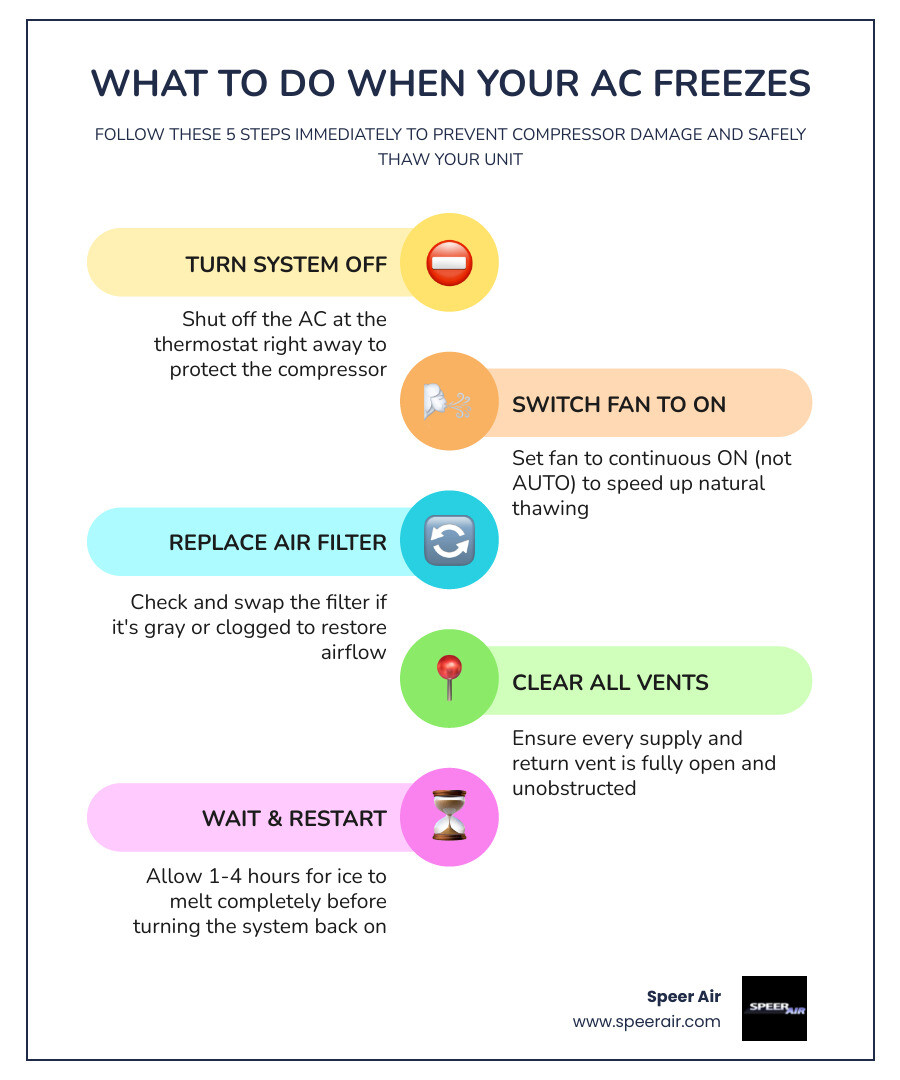
If you see ice on your AC unit right now:
- Turn the system off immediately at the thermostat — do not keep running it
- Switch the fan to ON (not AUTO) to help thaw the coil naturally
- Check your air filter — replace it if it looks gray or clogged
- Make sure all vents are open and nothing is blocking return grilles
- Wait 1 to 4 hours for the ice to melt completely before restarting
- Call a licensed HVAC technician if the ice returns after you restart — that points to a refrigerant leak or mechanical failure that needs professional repair
Ice on a running air conditioner is never normal. It does not mean your system is cooling extra well. It means heat exchange at the evaporator coil has been interrupted — either because warm air is not reaching the coil, or because refrigerant pressure has dropped too low. Both situations will get worse the longer the system keeps running. In fact, continuing to operate a frozen AC can destroy the compressor, which is the most expensive component in the entire system.
The good news is that most cases start with something simple — a clogged air filter accounts for roughly half of all AC freezing incidents. But if a filter swap does not solve it, the underlying cause needs professional diagnosis before real damage sets in.
Ice forming on your ac unit causes and what to do terms made easy:
- ac circuit breaker keeps tripping what it means
- ac not turning on what to check first
- ac troubleshooting tips before calling a professional
Immediate Action: What to Do When You Spot Ice on Your AC
When you look at your indoor air handler or the outdoor condenser and see a layer of frost resembling a New Jersey winter in the middle of June, your first instinct might be to let it run and hope it clears up. However, immediate intervention is necessary. If your system is frozen solid, you must take quick action to protect your equipment and your home. For a localized guide on handling this issue, see our advice on What to Do When HVAC Freezes in Maplewood.
Why You Must Turn Off Your System Immediately
Operating a frozen HVAC unit can cause serious damage to the compressor and other vital components. The compressor is designed to compress vapor, not liquid. When the evaporator coil is encased in ice, the refrigerant cannot absorb heat and remains in a cold, liquid state.
This liquid refrigerant can travel back down the line and flood the compressor—a destructive phenomenon known as “liquid slugging.” This can bend valves, break bearings, and ultimately destroy the compressor entirely. Shutting down the cooling cycle immediately is a crucial safety measure to prevent a simple repair from turning into a complete system replacement.
How Long Does It Take for a Frozen AC to Thaw?
It typically takes 1 to 4 hours for coils to unfreeze, depending on the amount of ice and the temperature inside your home. In severe cases with heavy ice accumulation, a complete defrost can take up to 24 hours.
To speed up the thawing process safely:
- Keep the cooling system turned OFF.
- Switch the thermostat fan setting to ON. This keeps your indoor blower motor running, continuously pushing warm indoor air across the frozen coil to melt the ice naturally.
- Never use a chisel, screwdriver, or sharp tools to scrape ice off the delicate aluminum fins, as you can easily puncture the refrigerant lines.
- Avoid pouring hot water directly onto the cold coils, as the sudden thermal shock can crack the metal.
As the ice melts, it will produce a significant amount of water. Ensure your condensate drain line is clear so you do not end up dealing with water damage in your home. For detailed troubleshooting on managing this meltwater, read our guide on Fixing Water Leaks from Your AC Unit.

Ice Forming on Your AC Unit Causes and What to Do
Understanding the physical causes of ice formation is key to preventing future freeze-ups. An air conditioner works by absorbing heat from your indoor air and transferring it outside. When this heat transfer is interrupted, the temperature of the evaporator coil drops below 32°F, causing the moisture in the air to instantly freeze on the coil surface. To explore these mechanisms further, check out our Solutions for Frozen Evaporator Coils in AC System.
Here are the most common causes of AC freezing, based on industry data:
- Dirty Air Filter (~50% of cases): The single most common cause. A clogged filter restricts the warm airflow needed to keep the coil above freezing.
- Low Refrigerant Leak (~25% of cases): A drop in refrigerant pressure causes the coil temperature to plummet.
- Blocked Supply or Return Vents (~10% of cases): Closed registers or blocked returns starve the system of warm air.
- Dirty Evaporator Coil (~8% of cases): Dirt acts as an insulator, blocking heat absorption and causing condensation to freeze.
- Failing Blower Motor or Fan (~5% of cases): If the fan cannot push enough air over the coil, the coil freezes.
- Thermostat or Outdoor Temperature Issues (~2% of cases): Running the AC when outdoor temperatures are below 60°F can cause freezing.
Airflow Restrictions: Clogged Filters and Blocked Vents
For your air conditioner to function properly, a steady volume of warm indoor air must pass over the evaporator coil. If this airflow is restricted, the refrigerant inside the coil cannot absorb enough heat. The coil quickly drops below freezing, and the natural condensation on the outside of the coil turns to ice.
A dirty air filter is the most common culprit behind restricted airflow. Over time, dust, pet dander, and hair clog the filter fibers, forcing the blower motor to work harder while starving the coil of air.
Similarly, blocking too many supply registers or return grilles—often done in a misguided attempt to save energy—disrupts the system’s pressure balance. To avoid these common mistakes, review our Save Money with These AC Troubleshooting Tips Before Calling a Professional.
Refrigerant Leaks and the Joule-Thomson Effect
Many homeowners assume that an air conditioner “uses up” refrigerant over time, much like a car consumes gasoline. In reality, your AC is a sealed system. Refrigerant circulates continuously in a closed loop. If your refrigerant level is low, it is always due to a leak.
When a leak occurs, the overall pressure within the system drops. According to the Joule-Thomson effect, as pressure drops in a closed system, temperature drops as well. This causes the refrigerant entering the evaporator coil to become much colder than normal—well below 32°F.
As warm, humid indoor air blows across this super-chilled coil, the moisture in the air freezes instantly on contact. If you suspect your system is running constantly to compensate for a leak, you can learn How to Diagnose Constant AC Running Issues.
Diagnostic Patterns: What the Ice Location Tells You
Where the ice forms on your system provides valuable clues about whether you are dealing with an airflow restriction or a refrigerant issue.
| Ice Location | Most Likely Cause | Diagnostic Meaning | Action Required |
|---|---|---|---|
| Entire indoor evaporator coil frozen solid | Restricted Airflow | Warm air is completely blocked from reaching the coil due to a clogged filter, closed vents, or a failed blower motor. | Replace the air filter, open all registers, and ensure the blower fan is running. |
| Partial ice near the start of the indoor coil | Low Refrigerant Charge | A leak has caused a pressure drop. The refrigerant drops below freezing as it first enters the coil, causing localized icing. | Call a professional to perform a leak test and repair the line before recharging. |
| Ice on the outdoor condenser or copper lines | Severe Low Refrigerant or Thermostat Malfunction | The refrigerant pressure has collapsed completely, or the system is running continuously in low outdoor temperatures. | Shut down the system immediately and contact a certified technician. |
Ice Forming on Your AC Unit Causes and What to Do for Indoor Coils
If the ice is concentrated entirely on your indoor evaporator coil (located inside your furnace or air handler cabinet), the root cause is typically restricted airflow.
When dust and grime build up on the coil itself, it acts as an insulating barrier, preventing the refrigerant from absorbing heat. This can cause the system to run constantly without cooling your home. If your AC is running continuously during peak summer days, read our guide on Why Your AC Runs Constantly During Heat Waves Fix It.
Ice Forming on Your AC Unit Causes and What to Do for Outdoor Lines
If you notice ice forming on the insulated copper refrigerant lines running between your indoor unit and the outdoor condenser, this is a strong indicator of a refrigerant leak.
As the low-pressure refrigerant travels back toward the outdoor compressor, it continues to freeze any ambient moisture on the outside of the copper pipes. This issue is highly urgent and requires a professional technician to locate the leak, repair it, and recharge the system with the proper weight of refrigerant.
Professional Repairs and Long-Term Prevention
While homeowners can easily resolve minor airflow issues like replacing a dirty filter, refrigerant-related problems and mechanical failures require professional repair. If you are tempted to tackle complex internal repairs yourself, consider our advice on why you should Don’t Be a Hero and Call a Professional for These AC Issues.
When to Call a Certified Technician
You should call a certified technician if:
- The ice returns within 24 hours after you have replaced the air filter and allowed the system to thaw.
- You hear a persistent hissing or bubbling sound near your indoor or outdoor unit, which indicates a refrigerant leak.
- The indoor blower motor is not running even when the thermostat fan setting is set to “ON.”
- You suspect an electrical issue, such as a faulty relay or a malfunctioning thermostat.
Only EPA-certified technicians can legally handle and charge refrigerants. If your system is located in Essex County, NJ, our team at Speer Air provides prompt and reliable AC Repair Maplewood NJ.
How to Prevent Your AC From Freezing in the Future
The best way to handle a frozen AC is to prevent it from happening in the first place. We recommend having your HVAC system professionally serviced at least once a year—ideally in the spring before the cooling season begins.
- Replace Air Filters Regularly: Change standard 1-inch filters every 30 to 90 days, depending on whether you have pets or allergies.
- Keep Vents Clear: Ensure at least 80% of your home’s supply registers and return grilles remain open and unobstructed by furniture, drapes, or rugs.
- Maintain Outdoor Clearance: Keep a 2-foot clear zone around your outdoor condenser unit. Clear away grass clippings, leaves, and weeds.
- Avoid Extreme Thermostat Settings: Do not set your thermostat below 70°F during extreme heat waves, as this can cause the system to run continuously and freeze.
- Avoid Running AC in Cool Weather: Do not operate your cooling system when outdoor temperatures drop below 60°F.
Frequently Asked Questions About Frozen AC Units
Is it safe to run an AC when ice is present on the coils?
No, you should never run your air conditioner if you suspect or see ice on the coils. Operating a frozen system forces the compressor to work harder under high stress, which can lead to catastrophic compressor failure. Turn the system off immediately and let it thaw.
Can a dirty air filter cause an AC to freeze?
Yes, a dirty or clogged air filter is the single most common cause of AC freezing, accounting for roughly half of all cases. It restricts the volume of warm indoor air flowing over the evaporator coil, causing the coil temperature to drop below freezing.
How do you know if your AC has a low refrigerant leak?
Signs of a low refrigerant leak include partial icing near the start of the evaporator coil, ice on the outdoor copper lines, hissing or bubbling sounds, longer cooling cycles, and warm air blowing from your supply vents. A certified technician must use specialized equipment to locate and repair the leak.
Conclusion
Ice on your air conditioner is a clear warning sign that your system is struggling with restricted airflow or a refrigerant leak. By taking immediate action to shut down the unit and allow it to thaw, you can protect your compressor from expensive damage.
For homeowners in Northern New Jersey—including Morris, Essex, Bergen, Passaic, and Sussex counties—our team at Speer Air is here to help. Founded in 1900, we bring over 120 years of family-owned experience to every service call. As a NATE-certified, Carrier Factory Authorized Dealer, we have the training and expertise to diagnose and repair all major brands of HVAC equipment.
If your air conditioner is freezing up or struggling to keep your home comfortable, don’t wait for a complete system breakdown. Schedule professional air conditioning service in Rockaway with Speer Air today to keep your home cool and efficient all summer long.